
As public art spreads across the city, residents are asking: does it brighten Worcester or distract from bigger priorities?

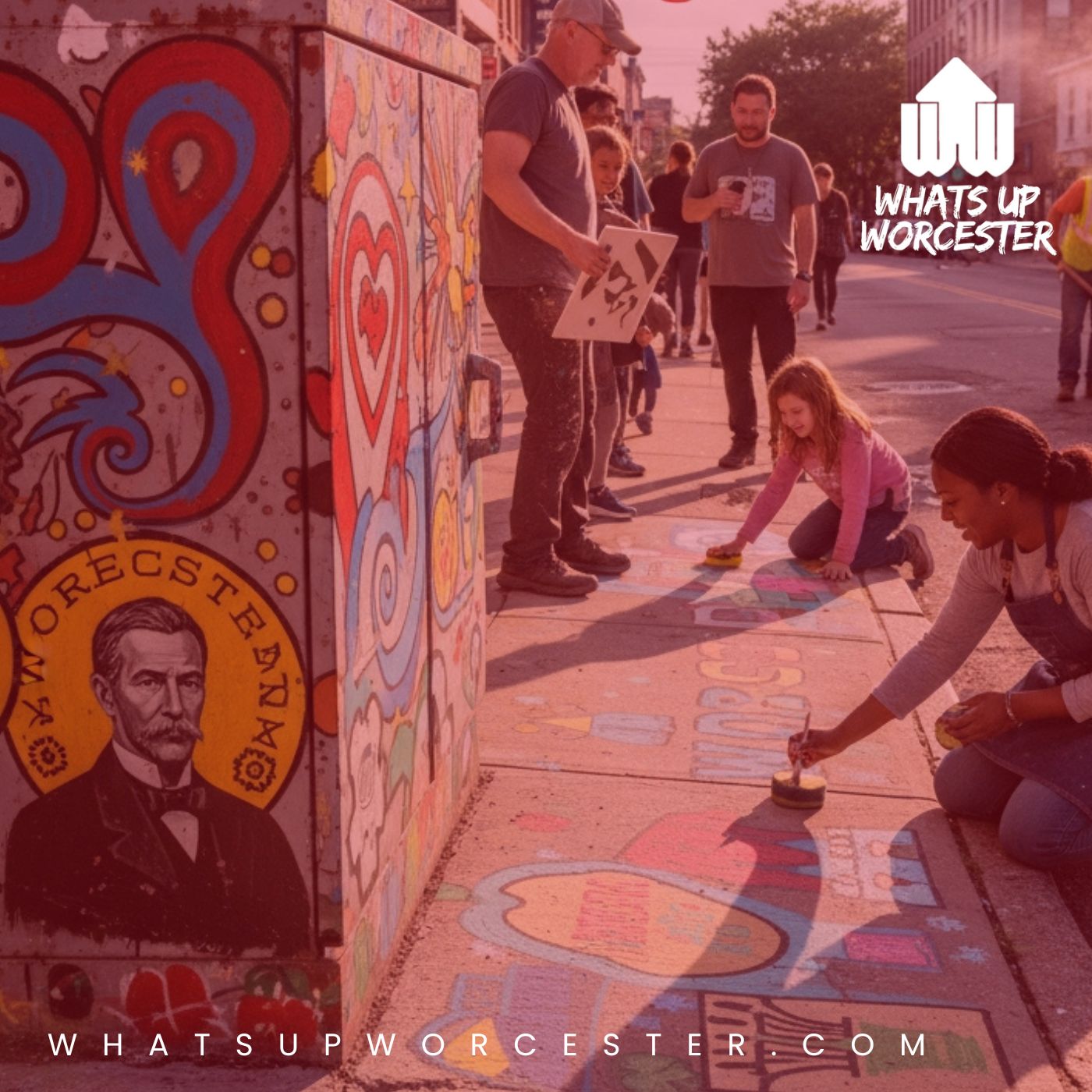
Worcester is in the middle of a quiet makeover. If you’ve noticed new mini-murals wrapping those drab power boxes, that’s the WooBox Art Project—37 utility boxes turned into small galleries by local artists. The wraps are designed to deter graffiti and withstand weather, and the first round paid artists a $750 honorarium per design.
At your feet, there’s art too. Worcester Green Corps’ catch-basin murals—painted on sidewalks around storm drains—launched in 2023 to remind us that “what goes on our streets ends up in our waterways.” More than 30 of these playful, educational pieces are now in place across the city.
This all raises a bigger question for Worcester: Does painting infrastructure help the city, or should that money and energy go directly into fixing core problems—like roads, trash, or public safety? Let’s lay out the facts and give everyone something solid to react to.
What’s Actually Happening (and Where)
- WooBox (utility boxes): City Cultural Development, Worcester Cultural Coalition, and the Department of Transportation & Mobility selected local artists to create 37 wrapped “mini-murals.” There’s a public art map available.
- Sidewalk/catch-basin murals: Worcester Green Corps, a Chamber of Commerce program, partners with the City’s Sewer Division and artists to paint storm-drain areas. The goal is public education about litter and clean water.
How Much Does This Cost (in Context)?
- WooBox scale: Artists were paid $750 per selected design, and the city used protective, graffiti-resistant wraps to install the artwork. Even with ancillary costs for printing and installation, this is a small line item relative to city spending.
- City budget reality check: Worcester’s FY25 budget is about $893 million. Capital spending for public works (roads, sidewalks, and equipment) alone totals roughly $13.7 million this year—separate from larger water/sewer capital lines.
- Road work snapshot: In 2024, the city added 3.5 miles of resurfacing for over $6.4 million across 21 projects—orders of magnitude beyond arts micro-projects.
Bottom line: However you feel about the art, financially it’s a rounding error compared with road repair programs.
What’s the Point of Painting the Ground and the Boxes?
- Civic pride & placemaking. The city frames WooBox as part of its Cultural Plan—using public art to make streets feel more welcoming and to showcase Worcester’s identity.
- Education & behavior change. Catch-basin murals specifically target a real problem: stormwater pollution. They’re meant to interrupt the “toss it here” habit and connect sidewalks to rivers and lakes like Indian Lake and the Blackstone.
- Safety (research outside Worcester). National data from Bloomberg Philanthropies’ Asphalt Art Safety Study found that painted intersections and crosswalk areas at 22 sites saw:
- 50% fewer crashes involving people walking/biking
- 37% fewer injury crashes
- 17% fewer crashes overall
While not Worcester-specific, it’s the best large-sample evidence available that thoughtfully designed street art can improve driver yielding and reduce conflicts.

What Supporters Say
- It brightens daily life and supports local artists. Small, frequent doses of art turn everyday infrastructure into something you notice—often with neighborhood stories and themes.
- It can serve a purpose. Catch-basin murals are a low-cost way to teach about litter and water quality right where habits form.
- It’s not “instead of” road work. Street repair sits in its own capital and DPW budgets; micro-art projects come from cultural and grant funds. They don’t meaningfully “steal” from pothole money.
What Critics Ask
- Is art the right priority right now? With persistent concerns about roads, trash, and basic services, some residents see art as “nice-to-have” during a time of need. For perspective:DPW road projects run in the millions—art wraps don’t fix pavement.
- Durability & maintenance. Even with wraps and clear coats, outdoor art weathers and can be tagged. The city says WooBox uses graffiti-resistant wraps, but upkeep still needs attention.
- Safety questions. Some traffic engineers are cautious about art on active crosswalks. The national research above is encouraging, but it’s crucial that designs follow local standards and placement best practices.
Quick Guide: How to Think About Trade-Offs
- Magnitude: Utility-box and sidewalk art are micro-investments relative to DPW. They’re funded and managed in different buckets. If you want better roads, the lever is the capital plan and DPW budget, not canceling art wraps.
- Mission: Sidewalk art can be functional (education/safety), not just decorative. The catch-basin program is explicitly about water quality.
- Evidence: Peer-city research shows safety gains when street art is done right—worth piloting and measuring locally.
Join the Conversation: What Do You Think?
Here are prompts to get Worcester talking:
- If we kept the art but required every project to have a measurable goal (litter reduction, driver yielding, foot-traffic counts), would that change your view? Which metrics matter most to you?
- Should the city tie every art project to a neighborhood need—like stormwater education or safe routes to school—so art dollars reinforce practical outcomes?
- If you had $25,000 to spend in your neighborhood, how would you split it between art and education, traffic calming (paint/flex-posts), and traditional fixes (curb/sidewalk concrete)?
- What kinds of themes or locations would make you feel proud (or annoyed) every time you pass a utility box or sidewalk mural?
- Would a public dashboard tracking art costs, vandalism incidents, and maintenance help build trust?
How to Weigh In (Constructively)
- Explore the city’s public art map, then send specific feedback (locations you love—or ones you’d reconsider).
- Tell the Cultural Development Office/Worcester Cultural Coalition what outcomes you want future art to prioritize.
- If your core issue is roads, focus your advocacy on the DPW capital plan and resurfacing schedules; that’s where the pavement dollars are.
One Last Thought
Public art and pothole repair don’t have to be enemies. Worcester can do both, and do both well, if we keep the budgets straight, demand clear goals, and measure results.
Now it’s your turn: paint or potholes—or a smarter mix of both?

Have news, tips, or a story Worcester needs to hear? Reach Editor-in-Chief Jerry Filmore at jfilmore@whatsupworcester.com or press@whatsupworcester.com (because community news starts with you.)
About The Author