By: What’s Up Worcester Staff
A City on the Rise Imagine Worcester in the mid-19th century. It is a city catching fire, not literally, though that occurred as well, but economically and industrially. The air is thick with the smoke of iron foundries. The streets echo with the clatter of horse-drawn carriages and the early rumble of the wire industry. It is a time of immense growth, where fortunes are being made in manufacturing and trade. It is also a time of division, where race often dictated the limit of one’s ambition.
Yet, if you were to walk into the prestigious Central Exchange Building on Main Street in the 1850s, the heart of the city’s financial district, you would find a business that operated despite the social obstacles of the era. Inside, amidst the activity of bankers and merchants, a Black man named William Brown measured carpets and restored high-end furniture for the city’s residents.
He was not a laborer. He was the proprietor.
In an era when many African Americans in the North were restricted to service roles, William Brown established a space for Black ownership in the center of the local economy. He set a standard for craftsmanship that would span decades. As we continue our Black Economic Success (BES) series, we look at the story of William Brown, a foundational figure for Worcester entrepreneurship.
Building a Business Downtown Born in 1824, William Brown moved from Boston to Worcester as a young man. He established his trade in the city in 1841. He did not come to the city to remain on the periphery. He came to build.
Brown established himself as an upholsterer and carpet maker. These trades required a high degree of skill, precision, and an understanding of textiles. In the 19th century, upholstery involved complex structural work and the ability to create quality goods in an industrializing world.
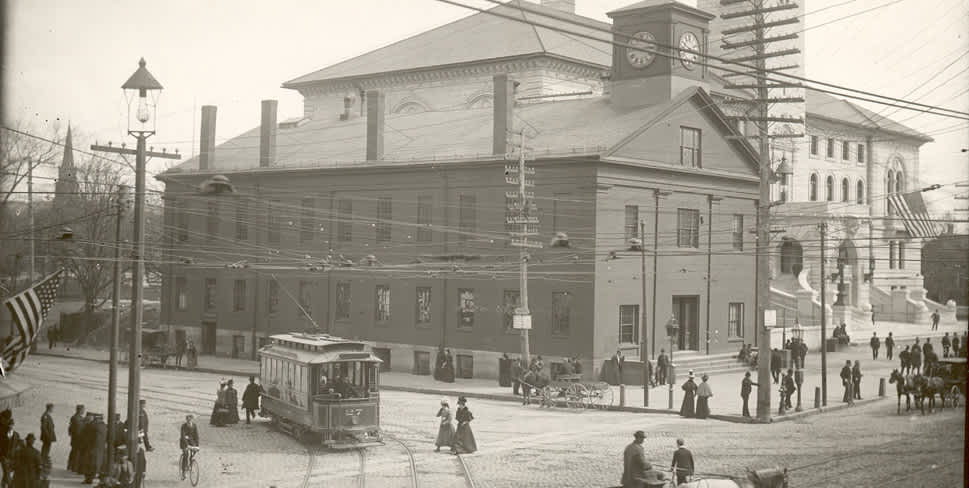
His business was situated in a high-traffic sector of Worcester. By securing space in the Central Exchange Building, and later in other downtown locations, Brown placed Black commerce in a visible part of the city. This was a significant achievement for the era. It demonstrated that Black-owned businesses could successfully compete in the center of the local economy.
William Brown did not build this legacy alone. This was a family enterprise. His wife, Martha Ann Brown, was a partner in the business and in the community. While William managed the shop and contracts, the operation was a shared responsibility. They built a reputation for quality that earned the respect of their customers and peers throughout the city.
Innovation and Excellence William Brown was also an innovator. Worcester has a history of valuing those who create and improve upon existing tools, and Brown was a master maker.
He was known for his ingenuity and is recognized as one of the city’s early Black inventors. He held patents for his own inventions, including Browns Patent Fruit Picker in 1867 and a new improved sofa bed in 1868. The fruit picker was even mentioned in an 1867 issue of Scientific American.
This spirit of invention helped him navigate the prejudices of his time. He proved that Black intellect and skill were vital to the city’s industrial identity. He was not just providing a service. He was providing expertise. When residents needed quality furnishings, they sought out William Brown because of the standard he maintained.
This commitment to excellence brought financial stability. He purchased a home at 4 Palmer Street in the Liberty Street neighborhood. By doing so, he established a foundation of stability and property ownership.
Breaking Barriers A significant milestone in William Brown’s career occurred in 1867. For decades, the Worcester County Mechanics Association (WCMA) was a prestigious organization for the region’s industrialists and craftsmen. Membership was a sign of professional standing.
In 1867, Brown became the first Black member of the WCMA. This was not a symbolic gesture. In the world of 19th-century trades, respect was earned through demonstrated skill. By admitting him, the association acknowledged Brown as a peer.
This membership provided access to networks and visibility often denied to Black residents. It allowed him to enter Mechanics Hall as a member of the guild that built it. His son, Charles, later followed in his footsteps as a member and an expert in interior decoration.

Community Leadership and Abolitionist Ties While building a business, William and Martha Brown were also active in the community. They understood the importance of supporting others during a time when slavery still existed in the South and inequality persisted in the North.
The Brown home on Palmer Street served as a center for civil rights activities. William and Martha were connected to the abolitionist movement. They were friends with Frederick Douglass, who stayed with them during his visits to Worcester. A letter from 1889 shows Douglass lamenting the death of his friend, referring to Brown as one of the city’s wealthiest Black residents.
Martha Ann Brown was a leader in her own right. she was the first woman of color to join the Ladies Benevolent Society of the First Unitarian Church of Worcester. She and other women raised funds for the welfare of freed and fugitive slaves. Their home was a site of hospitality for abolitionist leaders and those seeking freedom.

From Brown to Today’s 508 Entrepreneurs The legacy of William Brown continues in Worcester today. It is seen in local restaurants that serve as neighborhood anchors. It is seen in founders working in modern spaces like the Grid. It is seen in nonprofits that provide arts and mentorship to youth.
William Brown was a prototype for the modern entrepreneur. He operated in a challenging environment and maintained a visible presence downtown. He insisted that his work be judged on its quality. His story shows that Black Economic Success is a foundational part of Worcester’s history. Black entrepreneurs have been building the economy and leading the community for over a century.
A Legacy for the Future In 2026, the local business community continues to face new challenges, but the goals of building stability and visibility remain. William Brown’s life shows that business ownership can be a form of community leadership.
The next time you visit the Mechanics Hall Portraits Project, you can see the recognition of William and Martha Brown. Their story reminds us that excellence has long been a standard in our city.
Residents are encouraged to learn more about local history and to support the businesses and organizations that contribute to the city today. Black economic success is a central part of Worcester’s past and its future.

🔍 The W.U.W. Verification Box
Project / Topic: The Legacy of William Brown: Worcester’s First Black Business Pioneer
Current Status: Permanent portraits of William and Martha Brown were unveiled at Mechanics Hall in 2024 as part of the Portraits Project.
Key Dates or Decisions: Established trade in Worcester in 1841. Inducted into WCMA in 1867.
Estimated Cost (if applicable): Not applicable.
Timeline (if known): William Brown lived and worked in Worcester from 1841 until his death in 1892.
Immediate Next Steps: The Portraits Project is now a permanent part of the Great Hall gallery at Mechanics Hall. Primary Sources: Mechanics Hall Portraits Project; American Antiquarian Society; Worcester Black History Project.
About The Author