


By Heather Smith
WORCESTER — You may have noticed them: sleek, black, dual-compartment trash and recycling bins standing tall on busy corners and near bus stops around Worcester. These are WooBins, and while they may look like a simple city upgrade, they’re actually part of a much bigger push toward a cleaner, smarter, and more connected Worcester.
The WooBins initiative is part of the city’s Zero Waste Program and Green Worcester Plan, both focused on improving environmental sustainability and quality of life. As of 2025, Worcester had roughly 50 public trash cans, most concentrated downtown, leaving entire neighborhoods underserved. Overflowing litter, illegal dumping, and food wrappers in tree beds weren’t just aesthetic issues; they were signs of an inequitable and under-resourced public infrastructure.
That’s why the city launched a crowdsourced mapping tool in late 2024, inviting residents to submit suggestions for where new bins were most needed. Over 830 responses flooded in, pointing to places like Grafton Street, Green Island, and Vernon Hill. The city used that data to inform the pilot rollout: in April 2025, 30 WooBins were installed in some of the city’s most frequently littered neighborhoods.
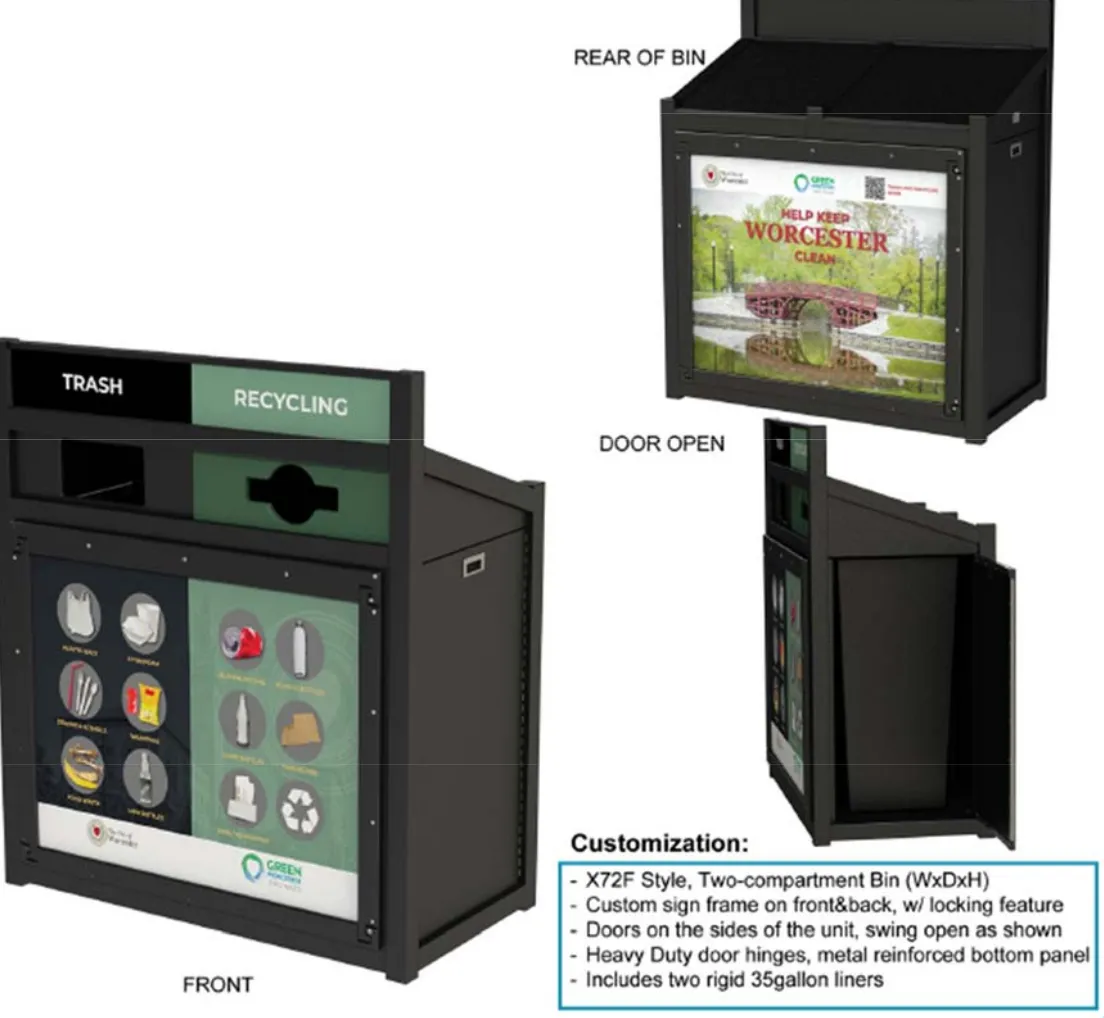
These bins aren’t your standard sidewalk cans. Each WooBin has two separate compartments, one for trash and one for recycling, and is clearly labeled to encourage proper sorting. The goal is to make on-the-go disposal easy while also reducing contamination of recyclable materials. They’re sturdy, clean-looking, and built to withstand heavy use.
But function isn’t the only focus. Worcester also wanted the WooBins to reflect the city’s character. That’s why the Department of Sustainability and Resilience issued a public artist call in spring 2025, inviting local artists to submit designs for the back panels of 50 bins. Selected artists received a $300 stipend, and each design had to reflect themes like environmental stewardship, community pride, or neighborhood identity.
This blend of function and creativity has turned the WooBins into something more than waste containers; they’re also public art installations. From colorful murals of city blocks to illustrated Worcester landmarks, the bins are becoming visual statements about who lives here and what matters to them.
According to Miranda Hotham, the city’s Zero Waste Coordinator, the WooBins project is designed to meet residents where they are literally. “We’re not asking people to go out of their way to find a bin,” she said during the pilot launch. “We’re putting them where they’re already walking, waiting, and gathering.”
In a city announcement about the public art initiative tied to the bins, Hotham added, “The new waste bins will support our municipality’s mission to create clean spaces in our community, and the opportunity to add local art is an exciting way for us to transform our neighborhoods for a cleaner, brighter Worcester.”
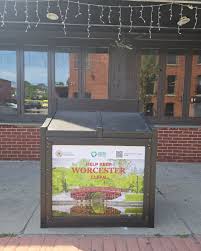
Community response so far has been enthusiastic. In Green Island, where bins were sparse before the pilot, residents have reported cleaner sidewalks and more consistent use. Several neighborhood volunteers with the Clean Streets Collective say they’ve noticed less litter near the new bins and more conversations about keeping shared spaces clean. The plan is to expand the program throughout summer and fall 2025, with a total of 150 to 200 bins planned across the city. The Department of Public Works and the Quality of Life Team are working together to monitor usage, maintain cleanliness, and adjust locations based on resident feedback.
Some residents have raised valid concerns about how the WooBins might be misused or overwhelmed, especially in light of recent challenges with city waste services:
- Overflow dumping during service disruptions: Trash collection delays around holiday weeks or snowfall have led to missed pickups and trash bags lingering on sidewalks. Some worry that, in these situations, people might start using WooBins as a backup dump site.
- Missed pickups and communication gaps: Unclear or inconsistent public notices about trash schedule changes, especially around holidays or weather delays, often lead residents to miss their collection day entirely. When that happens, some may turn to WooBins as a convenient place to unload household garbage rather than waiting a day or another week or dealing with overflow at home.
- Avoiding city trash bag fees: Because Worcester requires residents to use official city-issued trash bags, WooBins may feel like a loophole, allowing some to skip the cost by dumping household trash in public bins.
- Bulky item drop-off: With no on-site supervision, there’s concern that people might begin leaving furniture, mattresses, or oversized bags beside WooBins, creating eyesores and sanitation issues.
- Recycling contamination: The bins are divided for trash and recycling, but without strong signage or public reminders, it’s unclear whether people will separate waste correctly, or if everything will end up mixed together.
- Lack of outreach and enforcement: Without consistent education, signage, or city oversight, even well-meaning users might misuse the bins, leading to overflow, contamination, or eventual removal.
City officials acknowledge the risks but emphasize that maintenance, education, and
Feedback is built into the rollout. The Department of Public Works will monitor bin usage and cleanliness, while the Quality of Life Team will respond to illegal dumping reports. The city also plans to continue public engagement, offering signage, social media campaigns, and community ambassador support to help residents understand how and when to use the WooBins properly.
The WooBins may not solve Worcester’s trash problems overnight, but they represent a shift, one that acknowledges where the city has been and where it’s trying to go. And maybe, just maybe, a cleaner curb is where real change begins.
You may also like: Standoff on Fremont Street: Worcester Police Respond to Ongoing Situation

About The Author

