


What’s Up Worcester Creator Spotlight 2: Antonio Fonseca Vazquez, Still Puerto Rican

Puerto Ricans are Americans, but not all Americans are Puerto Rican. WUW explored the duality dilemma with local artist and Clark Professor Antonio Fonseca Vazquez
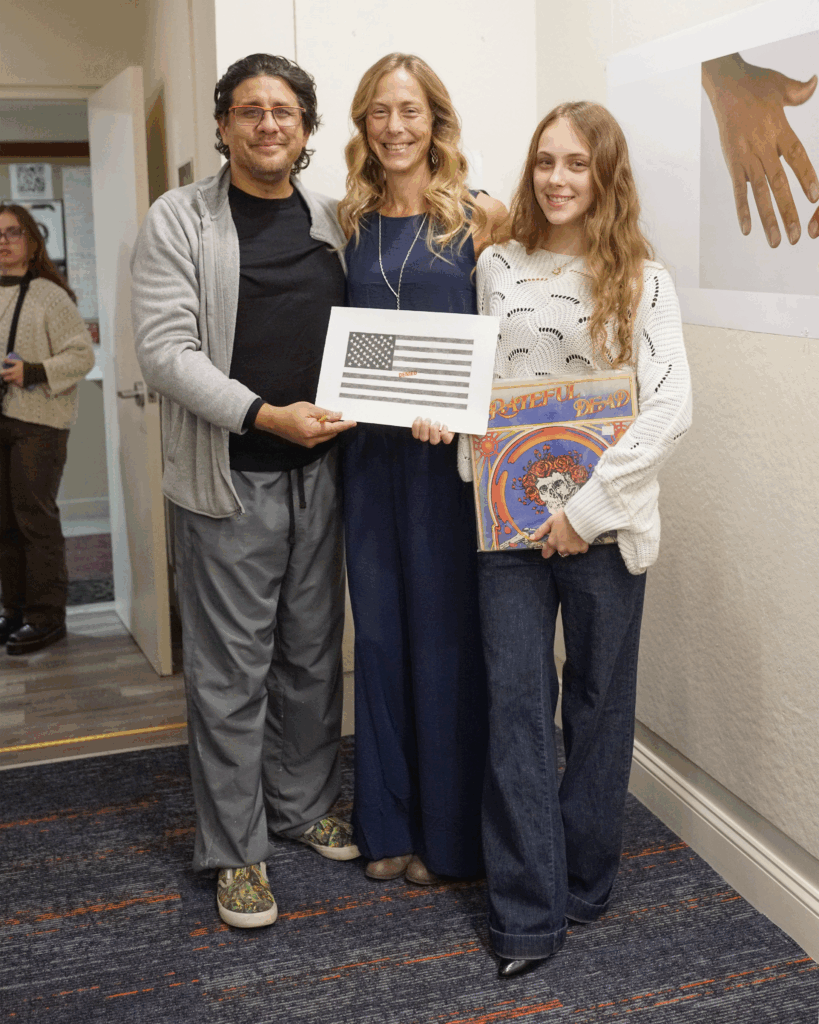
Still Puerto Rican: Identity Matters
By: Betsey Taft Kennedy, Managing Editor
October 27- What’s Up Worcester had the pleasure of attending the Closing Reception for celebrated local artist and beloved Clark Professor, Antonio Fonseca Vazquez’s exhibit: Still Puerto Rican at the WCUW Radio’s Harold Stevens Gallery at 910 Main Street.
Forenote: What’s Up Worcester has been sitting with this article for two weeks because it is so important to apply the utmost sensitivity to the topic of Puerto Rican identity. We have done extensive research (and barely scraped the surface!) to understand the backdrop of the Puerto Rican/American experience today when confounded with many variables: a history of colonialism, cultural preservation, rights, liberties and access to opportunity. It’s complicated, and we are grateful to Antonio for sharing his story so that we can learn and share our new knowledge with our readers. All a person can do is try to understand. (All highlghted text is clickable, linking the reader to more information,)
The Artist: “Being a Person”
Born and raised in Caguas, Puerto Rico, Vázquez received a Bachelor’s degree in Printmaking from Escuela de Artes Plasticas y Diseno in San Juan, Puerto Rico in 1997 and briefly taught elementary art in Old San Juan. In 1999, he received his Master of Fine Arts from Cornell University, and soon after, he became a valued member of the Greater Worcester community as his art exploded onto the international scene. He has been recognized by the government of Puerto Rico and of the City of Caguas for his outstanding contributions to the cultural development of his hometown and island and for a lifetime of work promoting and preserving Puerto Rican cultural heritage. He has shown his mixed media art globally, winning awards in the artist’s paradise of the Cote d’Azur, France, in Puerto Rico and on the US mainland. His works include colorful paintings, detailed drawings, mixed media installations, prints and layers of Puerto Rican American dialogue and history.
His pieces can be viewed in his hometown of Caguas, and he can be found on any given day: teaching at Clark University; managing learning and development programs at Venture Community Solutions in Sturbridge; creating multi-disciplinary art in-studio; spending time with his family and friends; or contributing to the Puerto Rican and LatinX causes in Central Mass. This is important because “Puerto Ricans are the largest Latino population in Massachusetts” and are disproportionately impacted by US policy and problems such as poverty and access to education, according to the Gastón Institute for Latino Community Development and Public Policy Development, UMASS Boston. Vazquez’s cross-sectional representation at community access points such as education, community services, and art institutes is priceless (no pressure!) to the understanding of Puerto Rican human and civil rights. He is currently a beloved Professor of Practice at Clark University’s Visual and Performing Arts Department, and his extensive CV, spanning more than three decades of established artisanship is evidence of a community-first career.
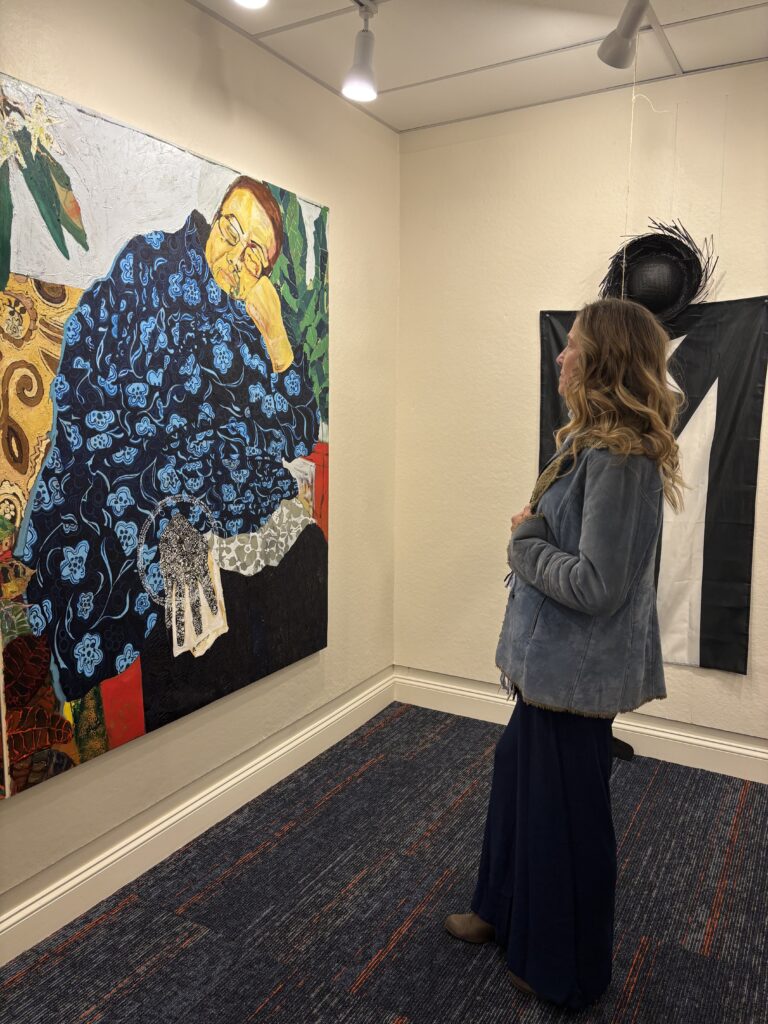
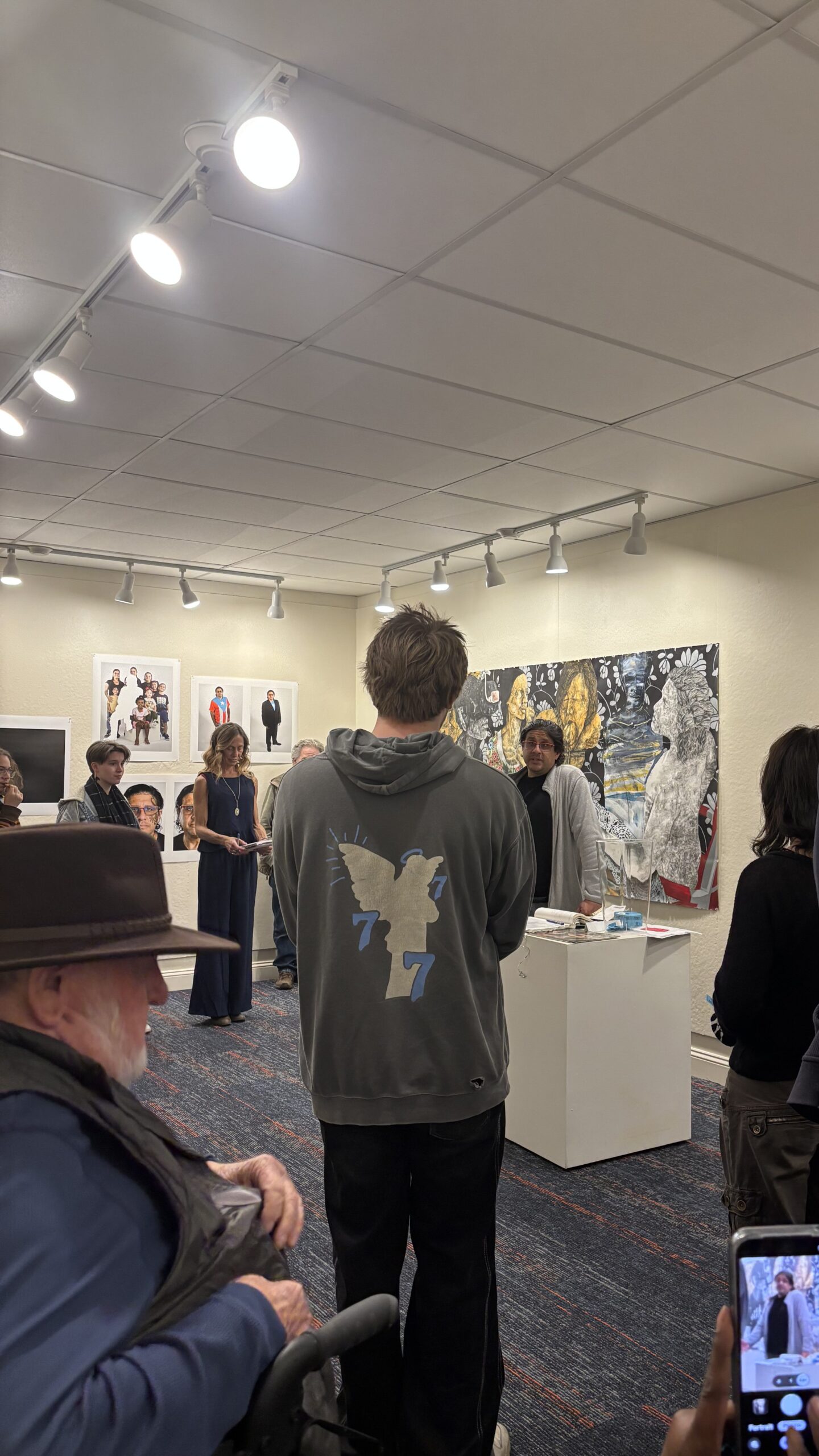
Many of his Clark students were in attendance at the closing of Still Puerto Rican. In fact, the Harold Stevens Gallery at WCUW served as an off-site classroom on October 27. In lieu of class, his students were offered the unique experience of hearing their professor engage in critical conversation with Worcester residents. Vazquez was enthusiatic and invited the audience to ask questions about not just the art, but his process and purpose, his opinions and of course, the Puerto Rican history informing his art.
Access to this information is critical to our city because Worcester is home to a large Puerto Rican population, due in part to post-hurricane waves of migration and local efforts to support migrants. Also, the city always welcomes opportunities for local college students to engage with the greater public, and WCUW‘s close proximity to Clark allows for such exchanges. His students snapped photos of the exhibit and took notes in their sketchbooks: Perhaps Worcester will see his art reflected in their art (and his story in their story) someday soon! Vazquez is a storyteller, for certain. His art gives voice to identity challenges and internal struggles of being Puerto Rican and of being human. He said, “You can find your story inside our [Puerto Rico’s] story because it is about being a person.”
He is correct. We are all human, after all. The concepts of humanity winning over hatred and breaking through cultural stigma with conversational art applies perfectly to Worcester. Regardless of what part of the city you live in or frequent, which school you attended or whether you graduated, regardless of age or heritage, language or gender, you are a human, and that identity in-and-of-itself is ubiquitously valid.
Vazquez and his art have the ability to be connectors of humanity, links between cultures and peoples. He and his Puerto Rican flag sneakers, his humanity and strength, and his humor and resilience, are a shining example of American values in action. It would be difficult to find a kinder and more generous artist (and person) than Vazquez. He engaged with each viewer personally, answering questions and mingling with the crowd. His enthusiasm and joy in conversation about his art was infectious. He is as colorful and interesting as his art. His students all told WUW they love having him as a teacher and that his accepting and engaging manner make an impact on their college experience: he truly cares. He is also very, very cool. Vazquez showed gratitude and enthusiasm for WUW’s attendance at this event.
The Closing Discussion: Still Puerto Rican
Digging in
Vazquez conducted the closing remarks like an intimate conversation among friends during which he candidly shared personal struggles with mental and physical health on the precipice of the COVID shutdown. Still Puerto Rican emerged after a time he called “stagnant and depressing” during which he said that it was “hard to be and artist and not produce.” He shared that, though he has an extensive portfolio, he had a slump in terms of crafting his own art for many years. Again, the artist’s story, just like the Puerto Rican story is one of “being human”, and every human struggles sometimes. No one is exempt from a “slump” in life.
An artist has a unique opportunity to give voice to these struggles, and Vazquez does this by exposing his own vulnerability along with the populations for which he speaks. Many people felt stagnation and aimlessness during the COVID pandemic. Racial tensions continue to peak and retreat over and over in this country. Politics and economic matters affect everyone, except, perhaps, the one percent. And yes, there is continued division between the large local Puerto Rican population and other US citizens, and a gap in access to institutions such as education, particularly when language is in question.
Vazquez said he couldn’t have predicted that the timing and relevance of this exhibition would align with heightened tensions for Latinos in America. Vazquez said the concept of “social impact was not as intense at the time of conception” of Still Puerto Rican. How this translates is that the identity challenges for Puerto Ricans and racial profiling pre-existed recent immigration policy, and yet the timing couldn’t be more right to raise awareness of biases. National identity has never been more in question for all Latinos than it is in our polarized nation today. Deportation is real, but being Latino does not indicate a need for deportation. Many Latinos and ALL Puerto Rican natives are statutory US citizens by birthright.
What’s Up Worcester urges our readers to learn more about Puerto Rican history because it is American history. Understanding this and the greater Latino population in Worcester because we all know someone who could be misidentified as an “illegal.”
This is more than a “slump” in our country’s racial history.
Real talk
The Exhibit
Vazquez’s exhibit was a commentary on Puerto Rican identity stigmas and Puerto Rico’s turbulent experience as a colony, and subsequently a territory, of the United States. Using mixed media, he walks the viewer through themes of power and control, gentrification and cultural exploitation, of labeling and otherness, and ultimately, of undeniable humanity. It was also the narrative of a man who re-claimed his joy in art and story-telling. The artistic slump is over.
As an existential artist, Vazquez has masterfully shown reception attendees, almost as if in real time, what it is to deconstruct and rebuild human identity in times of crisis and times of quiet. For example, a small house affixed to the wall bearing once-banned Puerto Rican flags (1948 “Gag Order”) across the windows and a slew of literal “porch monkeys” hits the viewer hard, as does a piece exposing failed hurricane relief after Maria devastated Puerto Rico in 2017. Vazquez’s willingness to expose human vulnerability and political turmoil with humor is a super power. This exhibit adressed the complexity of Puerto Rican identity by giving viewers glipmses at personal and political confusion about the status of the island and its people. It was a jumping off point for What’s Up Worcester to necessarliy dig a bit deeper into Puerto Rican American history.
Vazquez said his photographic self-portrait series is what ultimately spurred him out of his stagnant state and led to this exhibition. In the images, he plays with identity and shines light on common tropes of Puerto Ricans, such as the tattoed gang banger. In one, he has edited in face tattoos and in another, he wears a suit. In yet another image, he is represented amidst a group of children as a negative white space. The viewer wonders which is the best representation of a Puerto Rican? Which version resonates with us as truth? How are our biases super-imposed over our eyes when we choose the image we like the most or the least? The reality is, especially if you have met Vazquez, it doesn’t really matter what people think as long as their interpretations are from a place of human kindness. There is no right or wrong way to “be Puerto Rican,” and being Puerto Rican and being American are equally and mutually valid. But how one embraces a contested heritage and an ever-changing sense of belonging is truly a journey, one all humans must make with their own heritage and roles.
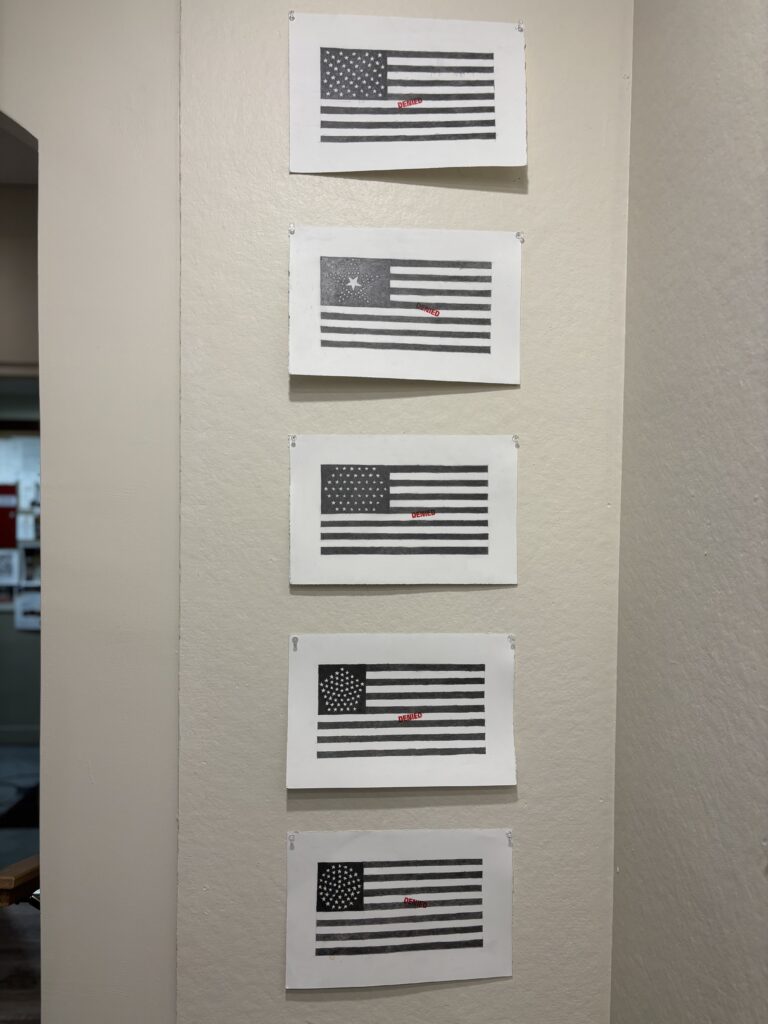
His black and white drawings of 5 pseudo-American flags were easily recognizable to viewers, but the different arrangements of stars were a parody of five of seven Puerto Rican referenda regarding statehood or independence. There was a visible gutteral reaction from viewers to the word “denied” stamped in red. Any human can understand rejection. (Note: What’s Up Worcester was lucky enough to win one of these drawings as a raffle prize, thus bringing some Puerto Rican and American art home, because Puerto Ricans are, indeed, Americans.)
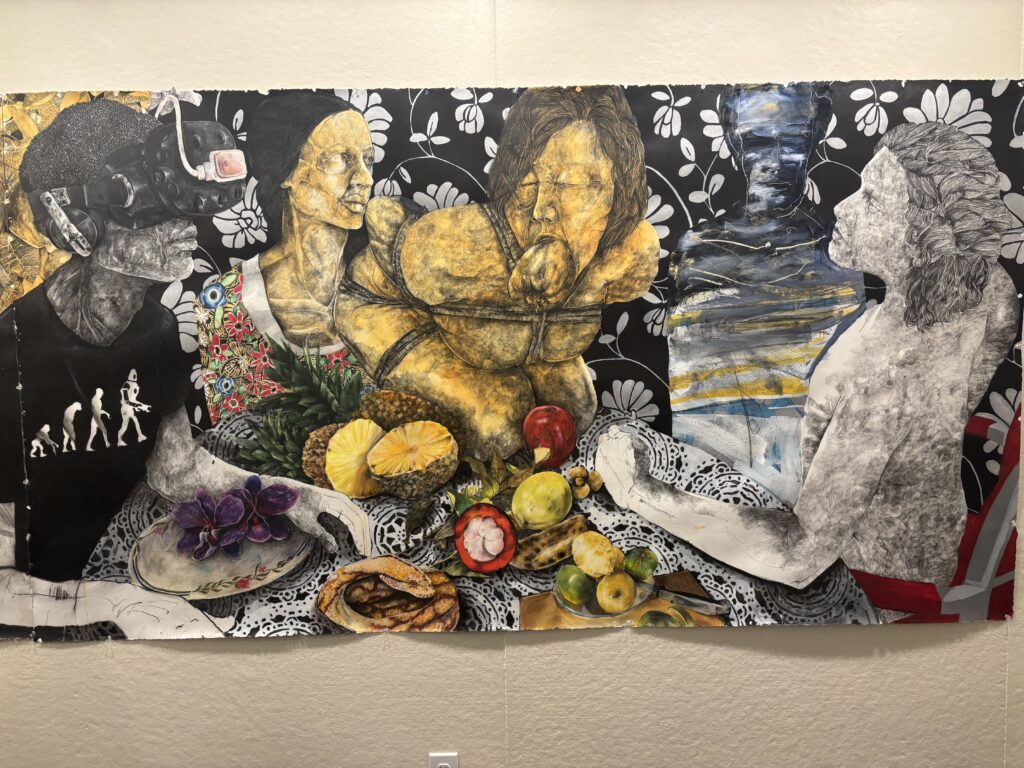
Vazquez’s largest painting at this exhibit was a sweeping mural-style piece shpwing iterations of Puerto Ricans over time*: from colonialism, through a relatively “hands off” government, to migrations and advances in technology. It appears that apples and pineapples are juxtaposed causing viewers to wonder which fruit is more American and which came first in the making of a country. Puerto Rico suffered greatly at the hands of Spain and America through colonial times.
The Problem is Not Puerto Rico: A Very Brief History of US Treatment of Puerto Rico
The political paradox that is Puerto Rico is a breeding ground for Puerto Rican American identity challenges, from within and without. Vazquez shared his experience with “othering” on the island and the mainland. He has been approached in public here and told to “go back to his country” and he has also been told by other Puerto Ricans that he is “too (European) American.” Racial profiling and Latino “othering” has an impact on identity formation and affects our most vulnerable population, youth, in negative ways, including in the juvenile justice system. Understanding the complicated history the US has with its Latino territory is critical to understanding the difficulties Vazquez and other Puerto Ricans have endured for generations.
The state of Massachusetts, like Puerto Rico, is a Commonwealth1, currently governed by Maura Healey, and subject to federal oversight. The difference is Puerto Rico, currently governed by Jenniffer González Colón, is neither a sovereign nation nor a state.
Today it is hard to say that the island is not more akin to a colony of the US than a sovereign place, despite its commonwealth status, location and unique blend of Taino (Indigenous), European Spanish (thus the language), American and other Carribbean islander influences and customs. It is a beautiful place, with rainforest and sweeping beaches, friendly people and local traditions, yet ownership is with the United States and specifically, the President. A territory is just that: a place with a mandate that land ownership and regulations lie in the control of an unchosen leader aka “property of”.
Puerto Ricans have been officially considered US citizens since the Jones-Shafroth Act of 1917, but with no representation or voting power in US presidential elections. Therefore, the people who inhabit Puerto Rico, despite earning the right to draft their own constitution in 1952 and select their own Commonwealth government, do not have a choice in their ultimate leader, currently: President Trump. Additionally, Puerto Rico is banned from independant trade with foreign partners and from receiving foreign goods, even in the form of disaster relief due to Maritime law, specifically the Jones Act of 1920. So, because goods must come from the mainlaind and Puerto Rico is neither a state nor a sovereign nation, presidential authorization is required for the island to receive, well, just about anything needed to survive or thrive and costs are higher. Tax incentives for US citizens who move business (eg mega resorts and factories) and residences to the island further complicate the situation for natives who are currently being displaced by “massive gentrification” and are also “losing beacfront”, natural resources and indigenous lands, explained Vazquez.
Resistance
Vazquez said in recent years, Puerto Ricans have engaged in peacful protest against land grabs, but they “can’t win against money.” A history of revolt, resistance and rebellion have been part of the Puerto Rican story since the time of colonization by Spain beginning in 1508.2 Puerto Rico territory was ceded to the US from Spanish colonizers in 1898 and fell under US military rule. The island was subsequently governed without consent by US Presidential appointees from the time of the Foraker Act of 1900 to until the 1952 establishment of Commonwealth status. But before 1952 and until today, resistance has not been absent. Vazquez art and his voice are excellent examples of quiet resistance. Seven aforementioned referenda can be viewed as attempts to garner support for resistance and independence from US rule. But some major and violent missing pieces are commonly missing from US history.
Prior to the 1952 initation of commonwealth status, The Nationalist Party (pro-independence) and labor movement’s (worker’s rights) resistance to colonial rule must be written into the story. 3Labor strikes, agitation, activities and arrests and the associated massacres in the 1930s illuminate the complicated Puerto Rico situation. The territory was, and still is, conflicted regarding statehood, independence or another alternative. The Sugar Strike of 1942 was related to demanding equal rights and pay for Puerto Ricans manufacturing and producing the priceless crop, who were only making a few hundred dollars a year, far less than mainland US workers. Puerto Rico standing up for rights was not the problem. The problem was, and is US government denial of Puerto Rican civil and human rights.
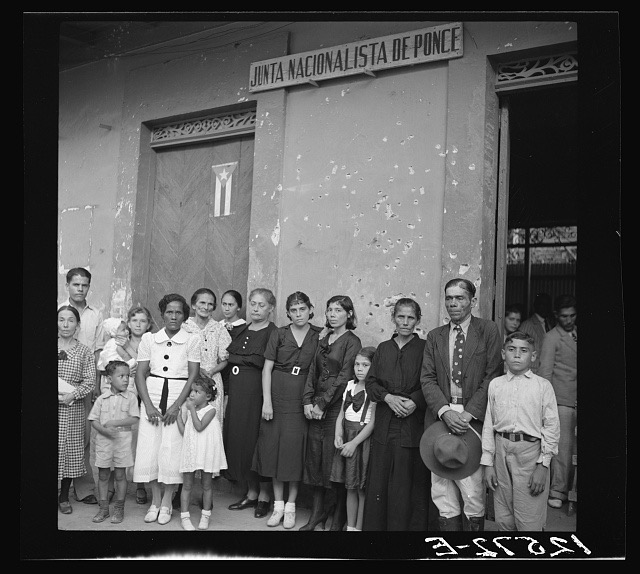
Creator(s): Rosskam, Edwin, 1903-1985, photographer, https://www.loc.gov/pictures/item/2017764618/
The Puerto Rican Revolution in 1950, culminating in insurrection on , under the leadership of Harvard-educated Pedro Albizu Campos familiarly known as “Don Campos” was demonized and connected to the communist party by mainland US news sources.4 In a fight for independence, nationalist sympathizers fought local police (who were under orders from US-appointed governers to suppress the threat) and organized a failed insurrection and attack on the US Capitol. The Nationalist movement was considered a direct threat to the mainland government (and trade routes, among other things) so, when information about Albizu Campos and the insurrection plan came to light October 30, 1950, then-governor “Munoz Marin dispatched 3,500 National Guard troops to suppress the insurrection in Jayuya, Utuado, and Arecibo”. Jayuya was bombed and attacked with tanks, leaving it leveled.
National Guard in US cities….sounds all too familiar.
It is unsurprising that with this complex history and the nature of immigration policy today, Puerto Ricans could feel racially profiled and underserved by our government.
What now?
With a clearer picture of mainland US and Puerto Rico US tensions, and obvious exploitation of Puerto Rican natives and their resources, perhaps we in Worcester can be more empathetic to the duality of being Puerto Rican and American. It is complicated, but we must remember that Puerto Ricans are US citizens, and yet, have retained their language and culture through more than 500 years of colonialist power. This is a feat and a credit to Puerto Rico, and demanding adoption of US mainland language (English) and culture is, at its core, racist, not to mention dismissive of a resilient culture and people.
Assimilation into mainland culture is natural and ‘Spanglish” is now mainstream (just watch Tik Tok for 1-2 minutes) but people still seem to have a problem accepting that Puerto Rico is America. Also, Puerto Ricans leaving the island threatens population retention5 and reciprocity of human value and wealth absent, and again, so are voting rights. Puerto Ricans do not choose their ultimate leader: the president of the US. They are racially profiled, especially now in light of the immigration conflict, though again,
Puerto Ricans are not immigrants.
They are US migrants, much like if a Massachusetts resident moved to Alaska or Hawaii, yet becasue Puerto Ricans are Spanish-speaking with a unique culture, some stateside Americans feel threatened. The fiasco with Bad Bunny headlining the Super Bowl is an excellent example. Once upon a time, during the Harlem Renaissance, people were threatened by assertions of what it meant to be Black in America, and now every kid in America recites Kendrick Lamar “They not like us, they not like us” like a national anthem. Imagine a Puerto Rican Renaissance and mainstream Spanish: How would additional cultural expression hurt America?
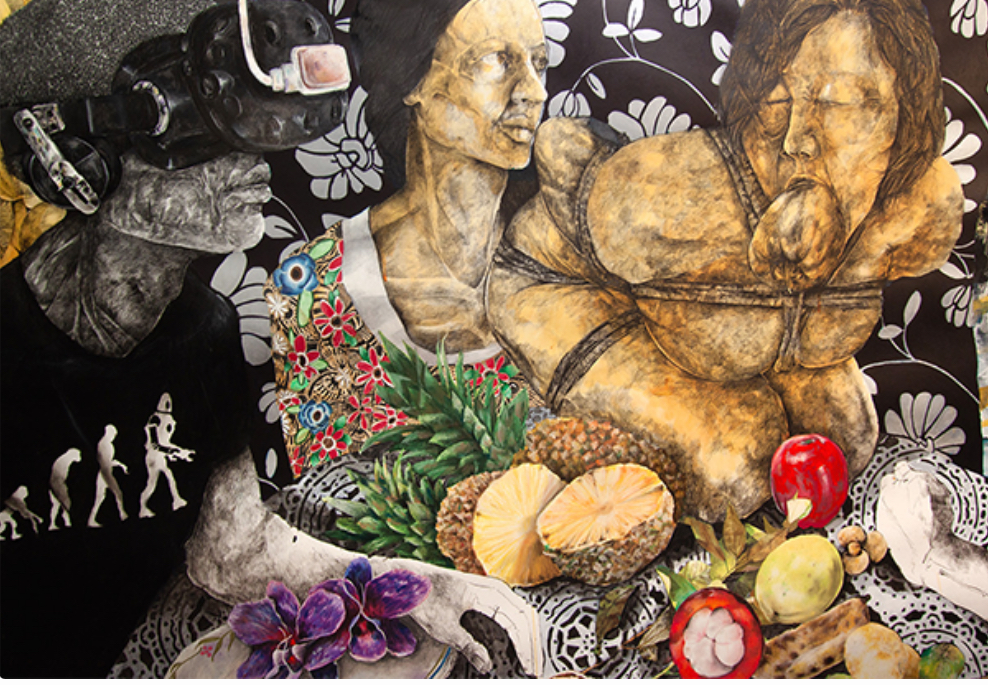
Vazquez’s art is beautiful and defiant and yet it hurts no one. His largest piece is iterations of Puerto Ricans living through colonialism and territorialism into this technological era. The shared his experiences of “otherness” in his closing remarks. He was raised and resided in both Puerto Rico and mainland US. He he has been teased by “Americans” (aka mainland white Americans) for being too Puerto Rican and by Puerto Rican people for being too “American.” He said recent racist encounters include being approached by strangers in public and told to “go back to [his] country” and that he has been spit on…
In America…By Americans…As an American. Sit with that for a moment.
Antonio Foseca Vazquez is American and he is Still Puerto Rican. We at What’s Up Worcester thank him again for greeting us, meeting us and unknowlingly initiating our quest for knowledge shared in this article.
Betsey Taft Kennedy, Managing Editor, What’s Up Worcester, betsey@whatsupworcester.com
Afterward
Letter from the Editor:
We have taken great care to portray the artist and the concept of Puerto Rican identity and history accurately and sensitively. We welcome feedback and assistance further understanding the situation, and Betsey Taft Kennedy takes personal accountability for links posted and any corrections needed henceforth. She can be reached at betsey@whatsupworcester.com.
Should anyone continue to be confused about Puerto Rican citizenship, in this letter concerning commonwealth status, The Acting Secretary of the Interior (Northrop) to the Secretary of State dated October 9, 1952, acting Secretary Vernon D. Northrop wrote,
“I am pleased to report to you that with the establishment of the Commonwealth of Puerto Rico on July 25, 1952, the people of Puerto Rico have attained a full measure of self-government, consistent with Puerto Rico’s status as a territory of the United States….
the people of Puerto Rico continue to be citizens of the United States and the Constitution of the United States continues to be applicable to Puerto Rico to the same extent as prior to the establishment of the Commonwealth.”
It sounds a lot like the island is a contingency experiment that could go south whenever the President gives the word, but that’s just my take. It does indeed affirm citizenship and is available publicly using the hyperlink. I urge others to do investigate the attached videos, documents and websites to learn more.
And yes, I have been to Puerto Rico, in February 2024.
Sincerely,
Betsey Taft Kennedy, Managing Editor
.
The Location at WCUW Radio 91.3 FM

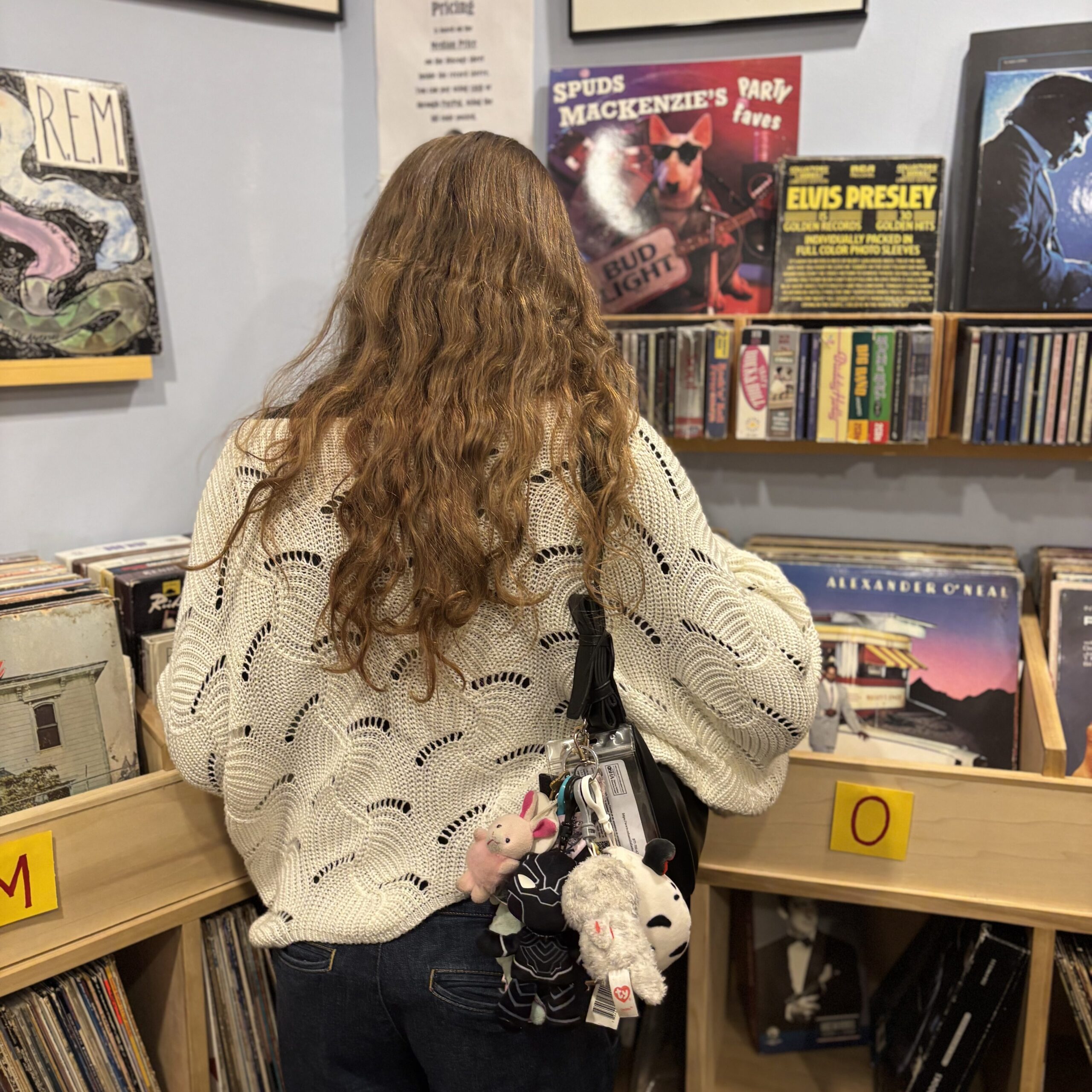
If you are early to an exhibit, you are welcome to have coffee or tea and relax in the Front Room, which operates as an indy movie theater and cozy music venue. Browse the vinyl store for a fairly-priced old school record or view the art in the Front Room by Rose Le Beau. According to loyal volunteers John Solaperto, Dan Hunt and Tim Starr (no, not Ringo), Le Beau’s epic and bold pop-art style series of 32 paintings was completed during the Covid shutdown.
- ‘The term “commonwealth” was adopted by Puerto Rico as the official English designation of the body politic created by the constitution (the official Spanish title is “estado libre asociado”), to define the status of that body as “a state which is free of superior authority in the management of its own local affairs but which is linked to the United States of America and hence is a part of its political system in a manner compatible with its Federal structure”, and which “does not have an independent and separate existence” (Resolution No. 22 of the Constitutional Convention).” Read in full: The Acting Secretary of the Interior (Northrop) to the Secretary of State, Vernon D. Northrup, Washington, October 9, 1952, letter to the secretary re: Puerto Rico self-governance. ↩︎
- See a brief linear history here ↩︎
- Note: This information was more difficult to find and more biased in US literature and news (from the editor). ↩︎
- Watch full video War Against All Puerto Ricans: Inside the U.S. Crackdown on Pedro Albizu Campos & Nationalist Party, Democracy Now, Apr 21, 2015. ↩︎
- https://puertoricoreport.com/preserving-puerto-ricos-culture/ ↩︎
About The Author


Comments are closed.
Been checking out 188betwin for the latest scores and betting tips. Pretty helpful stuff, especially if you’re trying to up your game. Good luck! More here: 188betwin