
Hey Worcester! We’ve got some important news from the Burncoat neighborhood that you need to know about. The Massachusetts Department of Public Health just announced that West Nile Virus has been detected in mosquitoes collected from a trap site right here in our city. Don’t panic though—our risk level is still sitting at “Moderate,” and city officials are already taking action to keep everyone safe.
What’s Happening Tomorrow Night
The Central Massachusetts Mosquito Control Project (CMMCP) is rolling out the big guns—literally. They’ve scheduled truck-mounted pesticide spraying for Thursday, September 11th, after 7 p.m. (weather permitting) in the areas where those positive mosquitoes were found.
If you live in or around the Burncoat area, you’ll want to pay attention to this. The city will be notifying specific neighborhoods that are getting sprayed, so make sure you’re signed up for ALERTWorcester if you haven’t already.
Not Into Getting Sprayed? You’ve Got Options
Here’s something cool – you actually have a choice in this. If you don’t want your property included in the wide-area spraying, you can opt out. Just head over to the Massachusetts Department of Agricultural Resources website at mass.gov/how-to/how-to-request-an-exclusion-or-opt-out-from-wide-area-pesticide-applications and follow their instructions.
But honestly? The experts recommend letting them do their thing. This isn’t just random spraying – it’s a targeted response to protect our community.
How to Stay Safe During Spraying
When those trucks roll through your neighborhood, here’s what you need to do to keep your family and pets safe:
Close up shop: Shut all your street-facing windows and turn off any “outside air” settings on your air conditioners. Think of it like battening down the hatches, Worcester style.
Keep everyone inside: This means you, your kids, and yes, even Fluffy and Rover. Pets should stay indoors from sunset to midnight, and definitely don’t let kids play near or behind those truck-mounted applicators when they’re working.
Wait it out: Stay inside during the actual spraying and for about 15-20 minutes afterwards. Perfect time to catch up on Netflix or finally organize that junk drawer.
Garden fresh safety: If you’ve got a vegetable garden (and good for you if you do!), make sure to wash off any veggies after the spraying and before you eat them.

The good news? Accidental exposure isn’t expected to cause health problems for most people. The pesticide they’re using is similar to what’s used for flea and tick control, so even if your pet gets a little exposure, they should be fine.
The 5 Ds: Your Anti-Mosquito Game Plan
Let’s talk prevention, because the best defense is a good offense when it comes to these buzzing little disease vectors. Public health folks call it the “5 Ds,” and it’s pretty easy to remember:
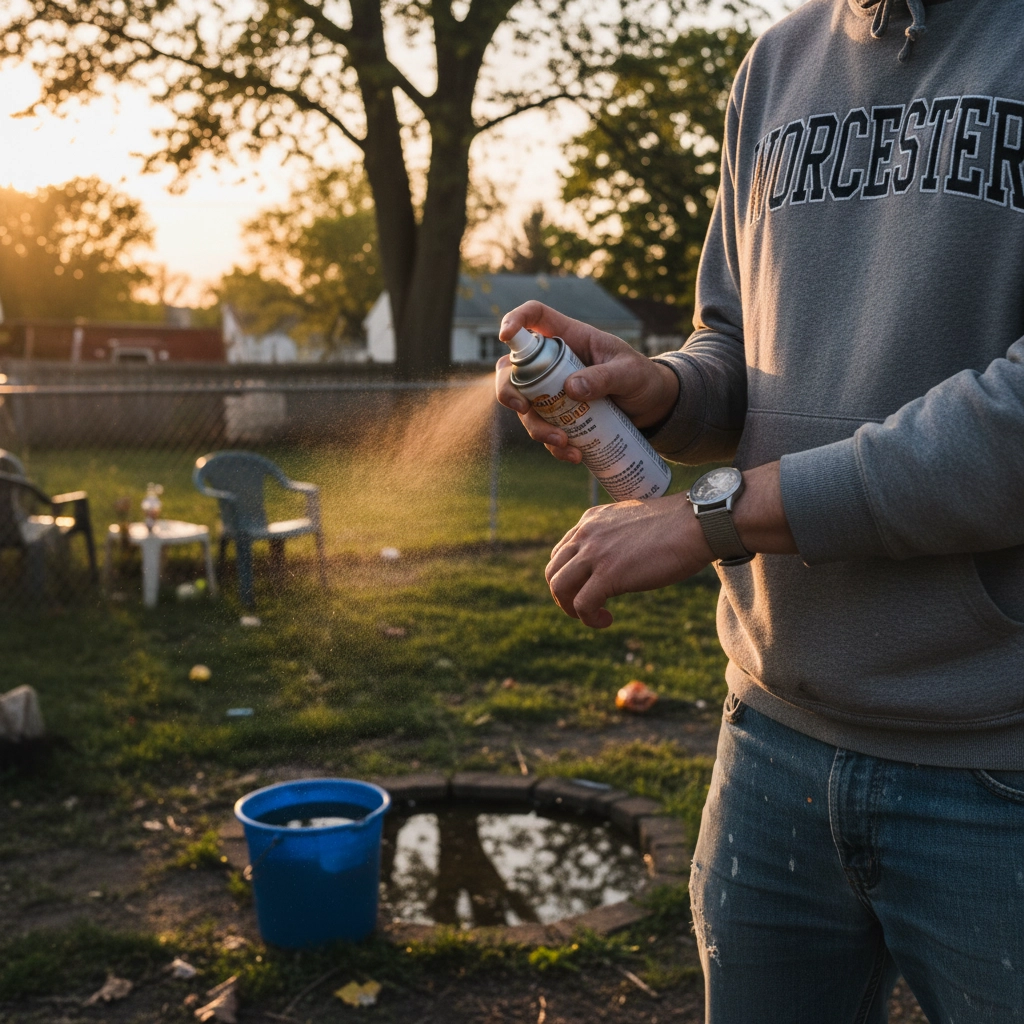
DRESS appropriately—long sleeves and pants when possible, especially during mosquito prime time. Yeah, we know it’s still warm out there, but think of it as armor against tiny vampires.
DEET is your friend—use insect repellent with DEET, and always follow the label instructions. Don’t go overboard—more isn’t always better.
DAWN & DUSK are danger times—these are when mosquitoes are most active and hungry. If you’re heading out during these times, take extra precautions.
DRAIN standing water—This is huge, Worcester! Check your property weekly for standing water in containers, buckets, toys, gutters, or anywhere water collects. Mosquitoes don’t need much—even a bottle cap full of water can become a mosquito nursery.
You can also treat your clothing with permethrin or buy pre-treated clothing. And don’t forget to install and repair screens on windows and doors—it’s like having a bouncer for bugs.
What You Need to Know About West Nile Virus
Let’s get real about West Nile Virus for a minute. Most people who get infected won’t even know it—they have zero symptoms. Some folks might get a fever or flu-like symptoms, and in rare cases, it can get more serious.
People over 50 are at higher risk for severe infection, so if that’s you or someone you care about, take these precautions seriously. Four human cases have been reported in Massachusetts this year, which shows this isn’t just theoretical—it’s happening.
The Worcester Division of Public Health is working closely with state agencies to monitor West Nile and other mosquito-borne illnesses. If a case pops up in our city, they’ve got procedures in place to handle it.
Stay In The Loop
Knowledge is power, Worcester, and staying informed is key. Here’s how to make sure you don’t miss important updates:
ALERT Worcester: If you’re not already signed up, get on this ASAP. The city uses this system to notify residents about spraying in specific areas via email, social media, and text. Head to worcesterma.gov/emergency-communications/alertworcester and make sure your contact info is up to date.
CMMCP Resources: These folks offer way more than just spraying. They do ditch maintenance, abandoned swimming pool treatment, and other mosquito control services. Check out their full 2025 spraying schedule at cmmcp.org/home/pages/2025-spray-schedules, or call them at 508-393-3055 between 7 a.m. and 3:30 p.m., Monday through Friday.
Daily Updates: Specific areas getting sprayed are posted on the CMMCP website and phone system each day after 3:30 p.m. Plans can change due to weather, mosquito populations, or special events, so check regularly if you’re in an affected area.
The Bigger Picture
This mosquito control program isn’t going to run forever – they’ll wrap up once we get consistent cool nighttime temperatures. That’s nature’s way of hitting the pause button on mosquito season.
The city’s response shows they’re taking public health seriously while keeping us informed every step of the way. From the early detection systems to the coordinated spraying response to the multiple ways they’re keeping residents in the loop – it’s community protection in action.
More Resources When You Need Them
For the deep dive on West Nile Virus and other mosquito-borne diseases, the Massachusetts Department of Public Health has comprehensive info at mass.gov/mosquito-borne-diseases. You can also call their Division of Epidemiology at 617-983-6800 if you’ve got specific questions.
If you think an animal might have West Nile or Eastern Equine Encephalitis (EEE), you’re required to report it to the Massachusetts Department of Agricultural Resources at 617-626-1795 and to MDPH at 617-983-6800.
Worcester Strong Against Mosquitoes
Look, dealing with mosquito-borne illnesses isn’t the most fun topic, but it’s reality in New England summers and early fall. The good news is that our city, state, and regional partners are on top of this, using science-based approaches to keep us all safer.
Your job is pretty straightforward: stay informed, take basic precautions, and don’t panic. We’ve got systems in place, we’ve got each other, and we’ve got this.
So tomorrow night, if you’re in the Burncoat area, close those windows, keep the pets inside, and let the experts do their thing. And remember – a little prevention goes a long way when it comes to protecting yourself and your family from mosquito-borne diseases.
Stay safe, stay informed, and keep being awesome, Worcester!
Want to stay updated on local health and safety news? Make sure you’re following What’s Up Worcester and signed up for ALERTWorcester. Because when it comes to community health, we’re all in this together.
About The Author