


By: Betsey Taft Kennedy

What are your plans for the long weekend?
For many people, Columbus Day in Massachusetts means a beautiful fall long weekend to enjoy seasonal activities like leaf peeping and apple picking and attend Italian Festivals. We don our sweaters, rake our yards, sip our cidar and thank Colombus for “finding” America, right? Yes and no. A call to rename the holiday Indigenous People’s Day, in honor the first stewards of our land, has led to confusion about what exactly we are celebrating.
In a nation divided by issues of nationality, heritage and belonging, I urge us all to take a closer look at the history of our country and our home towns. Right here in Worcester, long before English settlement, lived a vibrant indigenous society thriving on Lake Quinsig and beyond. While I will not undermine the importance of Italian heritage, of which Christopher Columbus’ “discovery” of the Americas in 1492, is a part, I kindly urge us all to consider the implications of the holiday for Indigenous peoples in general and in greater Worcester, specifically.
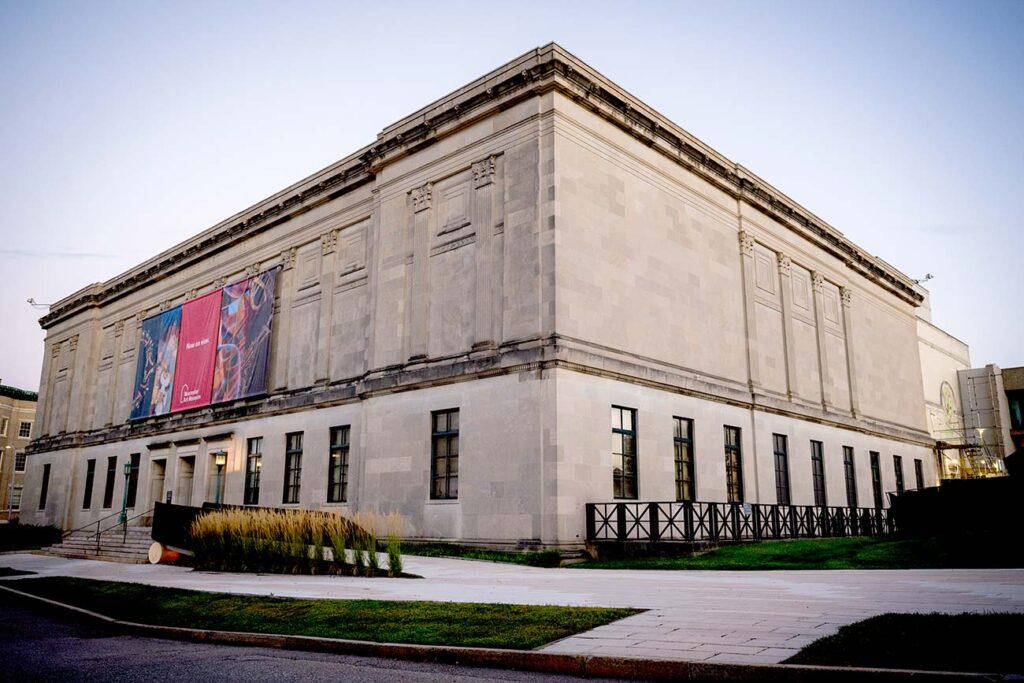
A quick search of Colombus Day activities in Worcester County linked me to fall festivals, brewery events and children’s activities all over our city and surrounding towns. An extensive search of Indigenous People’s Day activities revealed just one: Free Day: Indigenous Peoples’ Day | Worcester Art Museum. It perturbed me to discover the lack of attention paid to the very real and important story of the people who lived in and loved Worcester first.
Common knowledge says that “Colombus sailed the ocean blue in 1492”, but we must also understand he was the catalyst for influx of colonization and immigration to lands that were NOT “terra nullis.” Vibrant cultures, extensive hunting grounds, flora and fauna and most importantly PEOPLE, real people, with names, identities, trade networks, languages and everything else that makes a civilization… were HERE FIRST.
We know that tribes exist because we love the casinos, but did you know that Indigenous people live right up the street from you now? I did not.
So down the rabbit hole I go into the social and political history of Worcester and it’s pre-colonial beginnings. I am no historian, nor am I claiming tribal affiliation or asking you to change your plans. (Have that parade, treat yourself to a pumpkin spice coffee and maybe also allow a moment to honor the very first native people of Worcester and worldwide.) For this suburban mom, it simply feels critically important to gain perspective at a time when Worcester city council is resisting police affiliation with ICE (bravo!) and nationwide protests about rights are commonplace. As our country becomes ever more divisive, we need many voices to at least attempt to tell all sides of the story.
Perhaps there is a place and a celebration for all of us.
Follow me through the archives and easily available resources to learn a little bit about efforts to authentically narrate the beginnings of our city and the people who have endured, the Nipmucs.
We are all Immigrants on Ancestral Land
Did you know?
1. Worcester, Massachusetts, stands on the ancestral homelands of bands of the Nipmuc people, one of the Indigenous nations that have lived in central New England for thousands of years, ie before the arrival of the British.
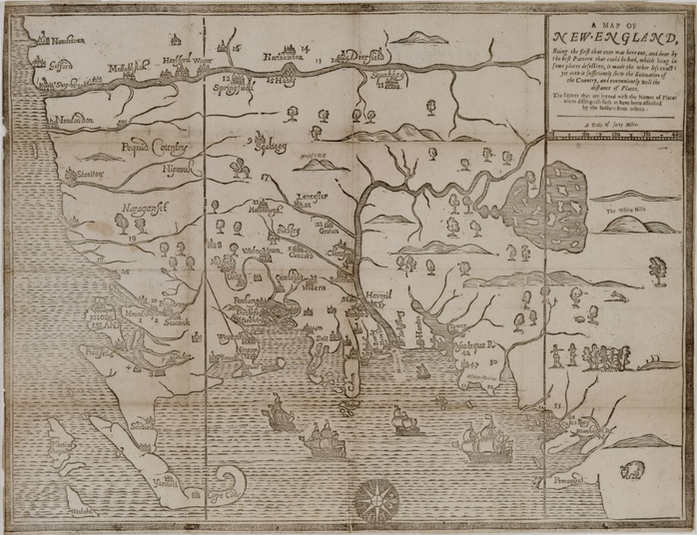
2. It took three attempts for Worcester to become an English settlement. Indigenous people did not cede their land willingly. First called Quinsigamond Plantation by settlers, the site of Worcester (yes like Worcester, England) thatlater became an industrial powerhouse of the 1800s, had a rough start.
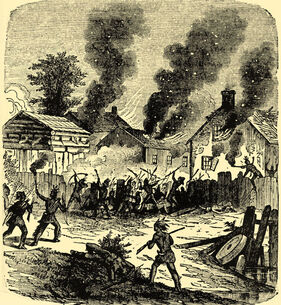
One story says that European settlers bought the once indigenous Quinisagmond Village, “for a pittance” from the Nipmucs in 1674. Another story states that settlers took over the area in 1673. The site was then razed, settled, raided and rebuilt many times by settlers and Nipmucs alike. Events like the bloody terror of King Philip’s war in 1675 and Queen Anne’s war in 1702 caused uprisings in Worcester as elsewhere and Quinisgamond Village was burned or abandoned. In 1713, the City of Worcester, with forts and mills, became the English settlement we know today and remaining Nipmucs were relegated to Hassanamisco Reservation and other surrounding areas.
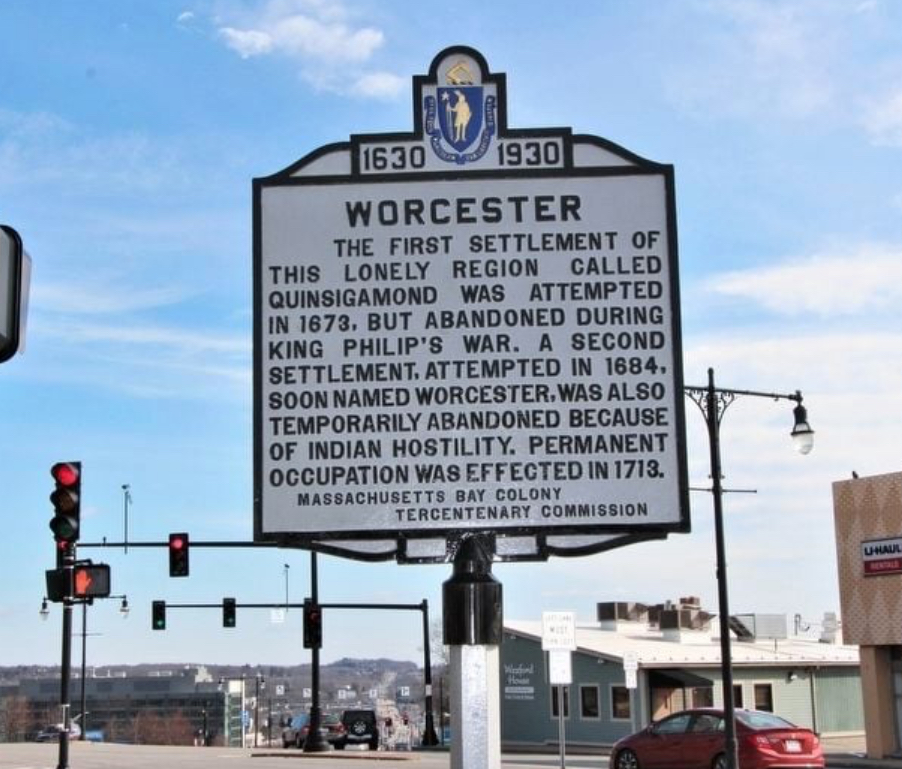
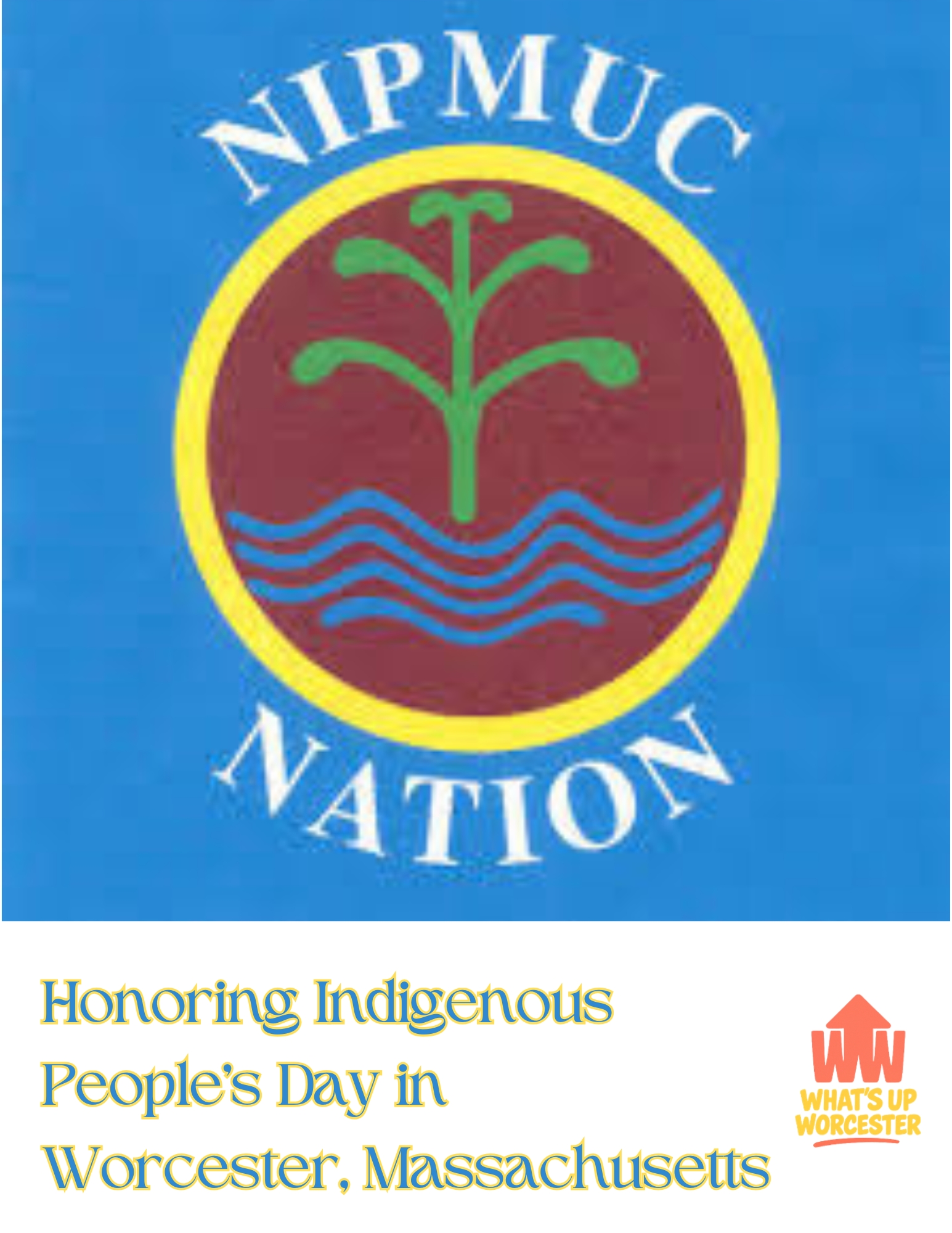
3. Today, the Nipmuc Nation is recognized by the Commonwealth of Massachusetts, with tribal offices located in South Grafton and Hassanamisco.
4. The Hassanamisco Reservation, one of the oldest continuously held parcels of Native land in New England, remains a vital cultural and spiritual center for the community. On the National Historical Register application, it says such
“The present-day Hassanamisco Reservation was part of the original Hassanamesitt Plantation, established in 1654 by the Reverend John Eliot. This plantation, located where there was an existing Nipmuc community of the same name, was intended as a mission where Native people would adopt Christian religion and elements of English culture. It was the third in a series of similar plantations, known as “praying towns,” established by Puritan missionary John Eliot.”
5. The statue of Christopher Colombus at Union Station still stands despite the removal of many national symbols of colonialism that relate to the exploitation of Indigenous peoples and Slavery during a national reckoning in 2020? It has been vandalized numerous times and still stands, as the discussion of removal was tabled by City council in 2022.

Proponents for keeping the statue state that it is a symbol of Italian American Heritage or that it is simply innocuous. The alternate argument is that it is a symbol of the genocide of not just indigenous peoples, but colonialism’s chattel slavery system. Perhaps we can see it as a reminder to consider our relationship with Worcester’s past and hold gratitude for all the people who have lived in or immigrated to our city?
A Very Brief Overview of the Nipmuc People: Past and Present
The Nipmuc, whose name means “people of the freshwater,” have deep connections to the rivers, lakes, and forests that define the region. Before European colonization, the Nipmuc Nation thrived through farming, fishing, and trade. Kinship, a common respect for earth’s resources, and trade transmitted cultural practices throughout Central Massachusetts, Northern Rhode Island and Northeastern Connecticut.
Their villages were connected by waterways and trails that later became the foundation for many of today’s roads and towns. (Can you imagine route 9 with no traffic?) Despite centuries of displacement, forced assimilation, and loss of land, the Nipmuc people continue to maintain their traditions, language, and governance, from South Grafton.
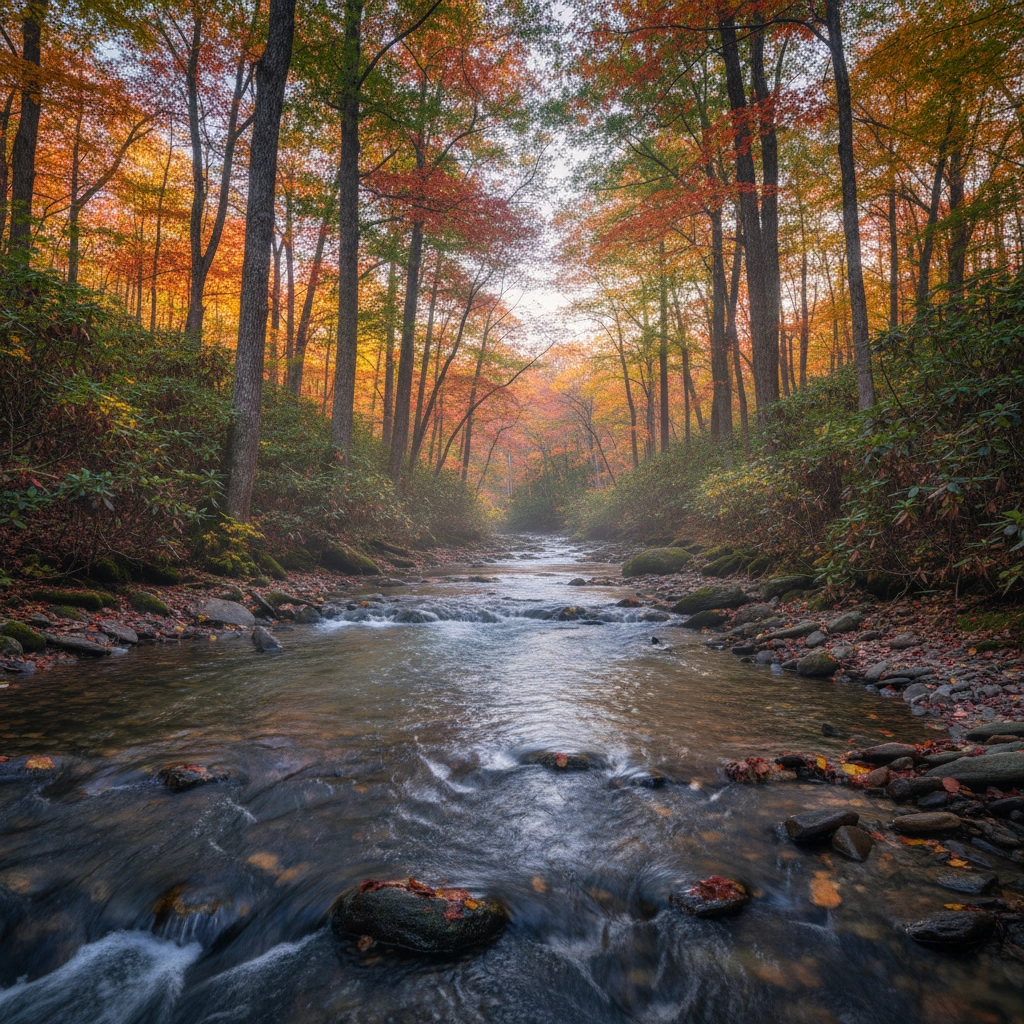
Right here in Worcester, long before it became a city, three Nipmuc villages thrived! When you paddle Quinsig, imagine Quinsigamond Village on the shore, a Nipmuc settlement thriving on agricultural practices and an abundance of natural resources. The lake’s name itself means “long fish place” in Nipmuc. Can you imagine eating fish on a spit at Lake Park today?? Imagine seeing smoke from another settlement high up on nearby Packachoag Hill, where fertile soil was tilled for corn, beans and squash, or walking the wooded hills to trade with the Tatesset (now Tatnuck/Holden/Paxton lines) villagers.
These villages were not isolated; they formed part of a vibrant regional system of Indigenous life that extended across central Massachusetts. Seasonal movement between sites allowed the Nipmuc to harvest resources sustainably and maintain strong social and spiritual ties across their territory.
These people were killed, uprooted, exploited for land, labor and resources for centuries and ultimately relegated to reservations including the Hassanamesitt reservation. Many were coerced or led into Christianity and Anglicized through schooling, “praying towns”, and other means. However, their native ways endured. Resistance by other means such as defense, ambush, hiding in the forest, rebuilding villages was eventually a losing battle, but cultural and spiritual continuity as a form of resistance can endure.
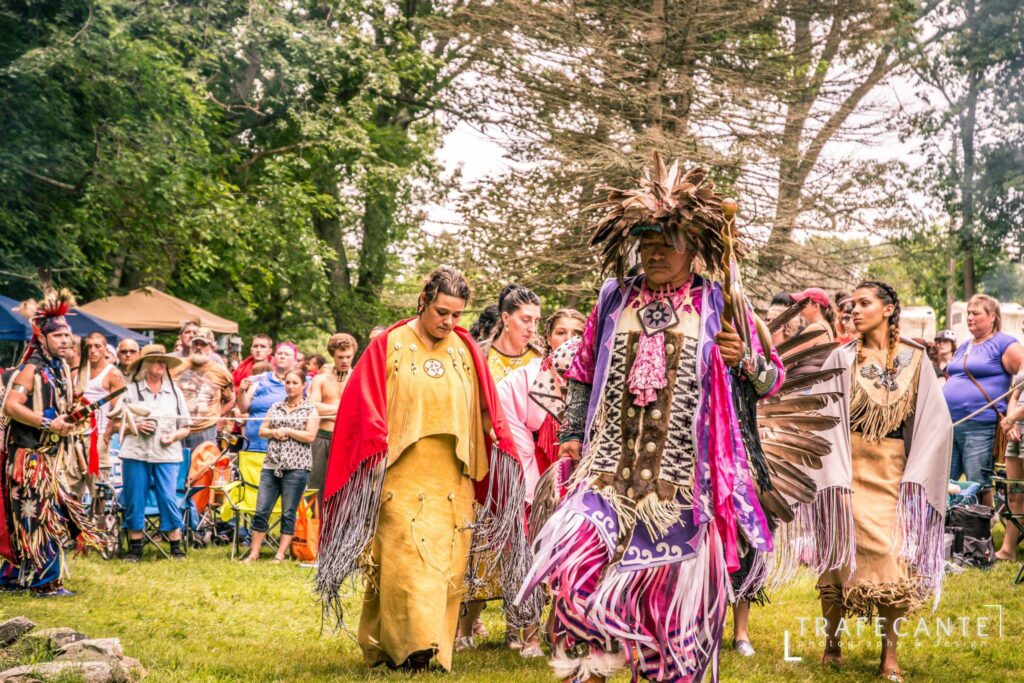
The Nipmuc Tribal Council, today located in South Grafton, Massachusetts, serves as a key governing body for the Nipmuc Nation, which incorporates members of the Northeastern United States. The council plays a vital role in preserving the cultural heritage, traditions, and rights of the Nipmuc people. According to their website, “Nipmuc Nation is a Constitutional Democracy and our Tribal Government is elected directly by the Citizens of Nipmuc Nation.” Additionally, they have a traditional Elder’s council. The site of the reservation has been on the National Historical Register since. The application for which states:
“The present-day Hassanamisco Reservation was part of the original Hassanamesitt Plantation, established in 1654 by the Reverend John Eliot. This plantation, located where there was an existing Nipmuc community of the same name, was intended as a mission where Native people would adopt Christian religion and elements of English culture. It was the third in a series of similar plantations, known as “praying towns,” established by Puritan missionary John Eliot.”
Recognizing this history is an essential step toward understanding Worcester’s cultural roots and honoring the resilience of Indigenous communities. Now that you have read about the Nipmucs and have a deeper understanding of our city’s early history, it is for you to decide how you perceive or celebrate the second Monday in October: Colombus Day, Indigenous People’s Day and a day off from work and school. We always have more to learn.
For more information and a catalogue of historical documents and artifacts, please see this link to the American Antiquarian Society, also located here in Worcester, which is working tirelessly to help Nipmuc and other Indigenous nations reclaim their history before the terror of colonialism. American Antiquarian Society Worcester Historical Society also provides archival information and relics of Indigenous peoples, as well as wonderful history resources. Facts about Worcester

Have news, tips, or a story Worcester needs to hear? Reach Editor-in-Chief Jerry Filmore at jfilmore@whatsupworcester.com or press@whatsupworcester.com ( because community news starts with you.)

About The Author




Comments are closed.
[…] Honoring Indigenous People’s Day in Worcester, Massachusetts […]
[…] Read: Honoring Indigenous People’s Day in Worcester, Massachusetts — celebrating the heritage and ongoing legacy of the Nipmuc Nation. […]