What’s Up Worcester! As autumn reaches its peak in New England and the leaves crunch beneath our boots, communities across Worcester get ready for a season filled with pumpkins, costumes, and playful scares. But before Halloween became the beloved holiday we celebrate today, there was Samhain, an ancient Celtic festival marking the most mystical time of the year.
The Origins of Samhain
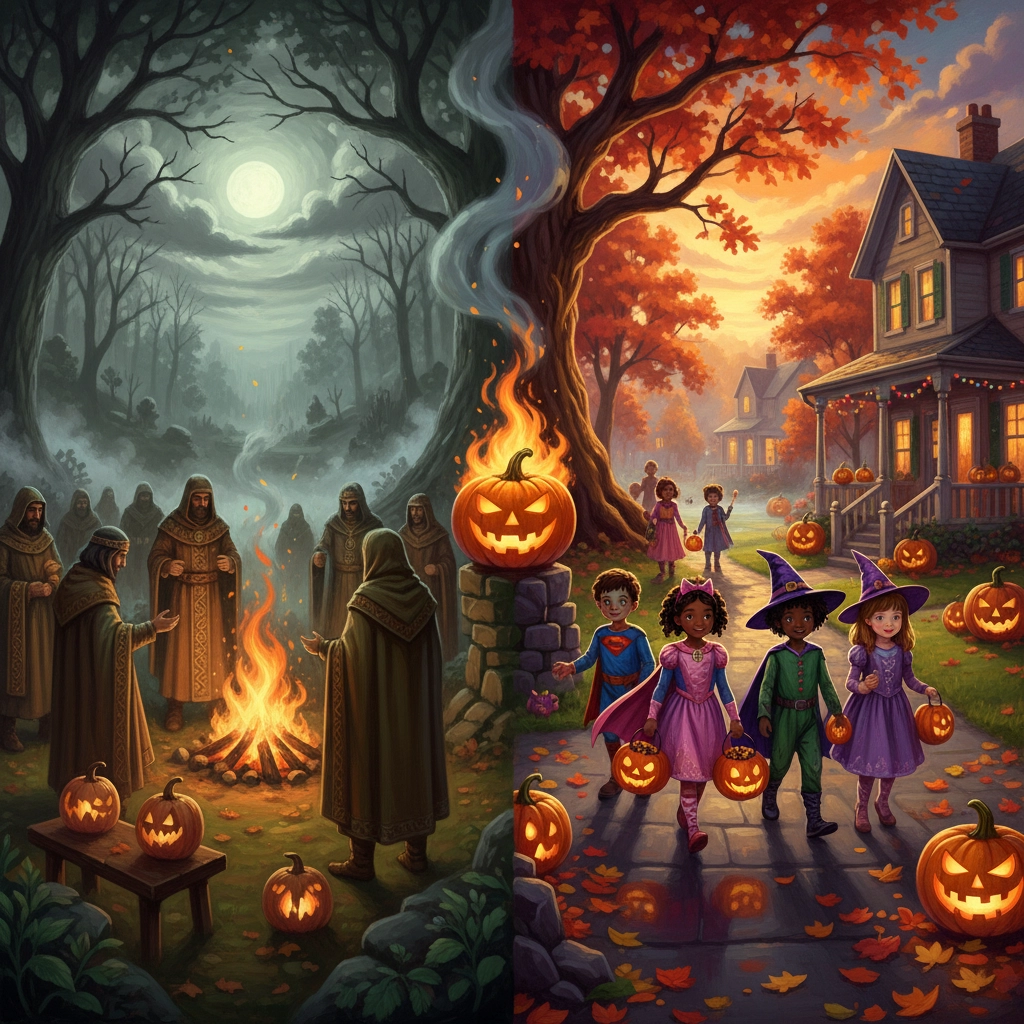
Samhain (pronounced SOW-in) dates back thousands of years. The Celtic people celebrated it as the end of harvest season and the beginning of winter, the darker half of the year. This transition was not only seasonal. It was spiritual.
Celtic belief held that during Samhain, the veil between the physical world and the spirit realm grew thin. Ancestors could visit the living, and messages from the other side were easier to receive. Families lit candles in windows to guide lost loved ones home and set places at the table to honor them during feasts.
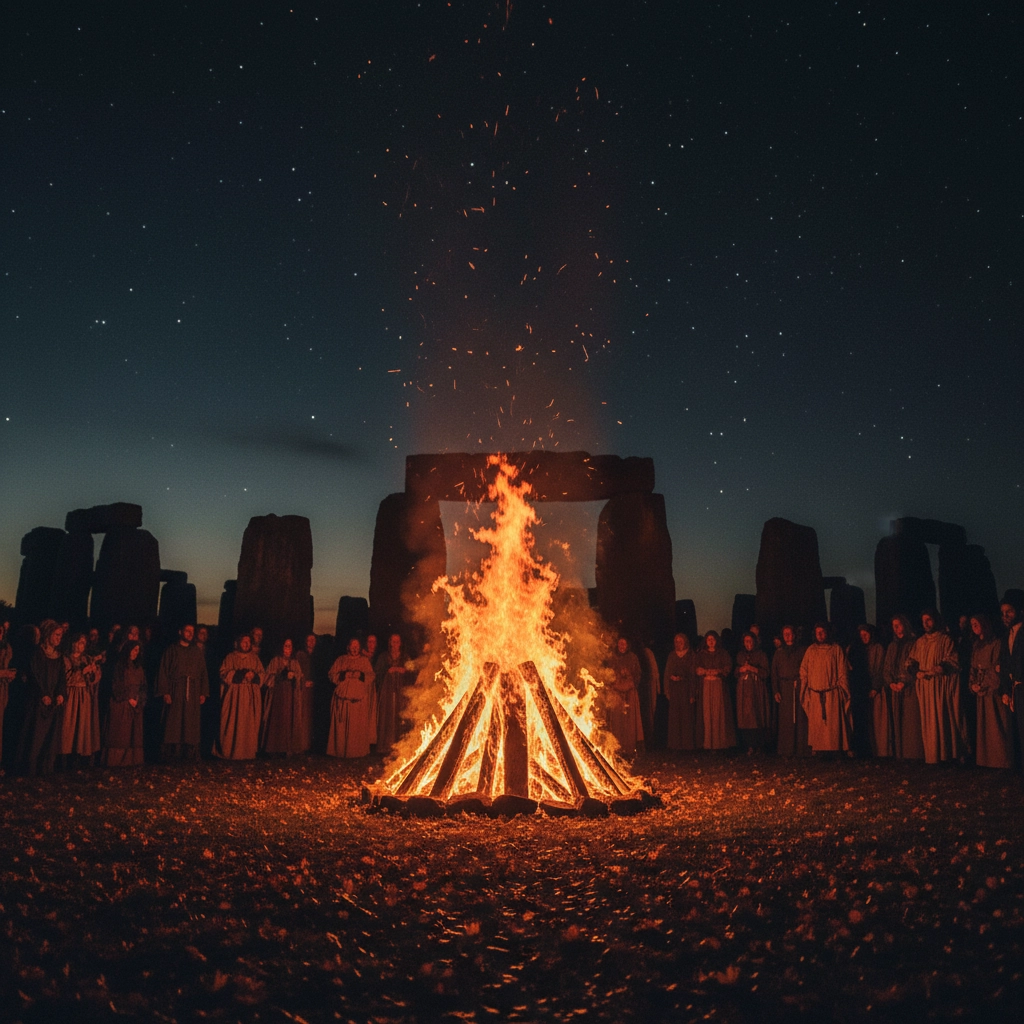
Bonfires were lit not just for warmth, but for protection and purification. Communities gathered to tell stories, offer gratitude for the harvest, and prepare for the challenges winter would bring.
Where Halloween Comes In
When Christianity spread across Europe, many pagan celebrations were adapted rather than erased. The church created All Saints Day on November 1 and All Souls day on November 2, giving way to All Hallows Eve, which eventually became Halloween.
As Irish and Scottish immigrants brought Samhain traditions to America in the 1800s, these customs blended with new cultural influences. The result was the festive, spooky, candy-filled celebration we know today.
But look closely. The ancient roots are still there:
Halloween Tradition → Samhain Connection
- Costumes and masks → Originally worn to confuse wandering spirits
- Jack-o-lanterns → Stem from carved turnips used as protection against mischief
- Trick-or-treating → Inspired by offerings to spirits and the poor collecting soul cakes
- Ghost stories → A reminder of the spirit world being close
We are still honoring the same mystery, just with more sugar.
Samhain is Not Evil
One of the most common misconceptions about Samhain is the belief that it is dark or dangerous. This misunderstanding grew over time as ancient pagan practices were judged through a later cultural lens.
In reality, Samhain is a celebration based on:
• Remembrance of ancestors
• Respect for the natural cycle of life and death
• Gratitude for the harvest and the year’s blessings
• Spiritual connection and introspection
There is nothing sinister at the heart of Samhain. It is about honoring those who came before us and acknowledging that life is a cycle. Darkness does not equal evil. It simply represents rest, renewal, and the turning of seasons that all of nature depends on.
Why Samhain Still Matters
Many spiritual practitioners, pagans, and witches, including members of Worcester’s vibrant metaphysical community, continue to celebrate Samhain as a sacred time.
It is a moment to:
- Reflect on the year behind us
- Honor those we have lost
- Embrace transformation and new beginnings
- Ground ourselves in nature’s cycles
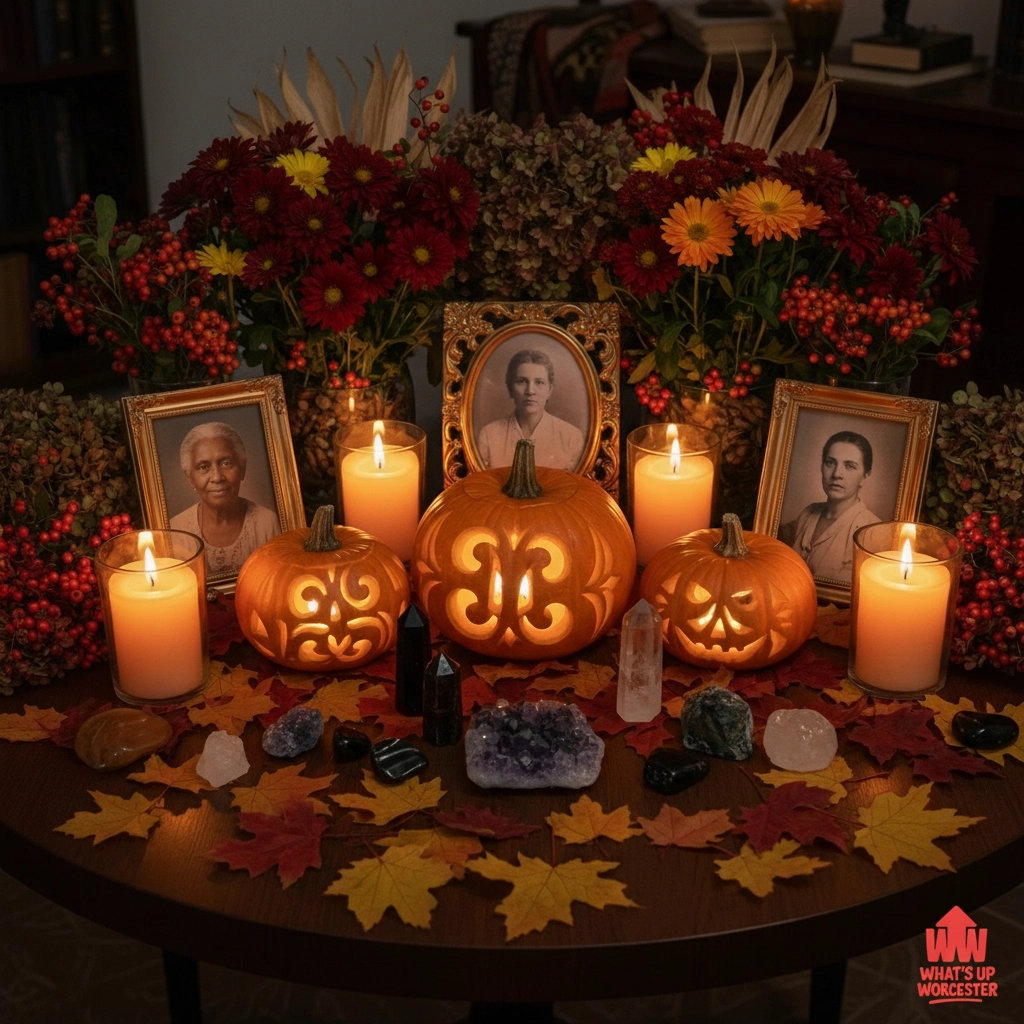
Whether you celebrate with ritual, quiet remembrance, or simply by enjoying a crisp fall night with loved ones, Samhain invites us to slow down and reconnect with what truly matters.
Celebrating in Worcester
From local fall festivals to community ceremonies and haunted attractions, Worcester holds space for both the playful and the profound. This season, take a moment between the candy and costumes to acknowledge the deeper magic in the air.
The veil is thin. The night is alive. And whether you call it Halloween or Samhain, this time of year reminds us that endings are never the end. They are the beginning of a new cycle.

Have news, tips, or a story Worcester needs to hear? Reach Editor-in-Chief Jerry Filmore at jfilmore@whatsupworcester.com or press@whatsupworcester.com ( because community news starts with you.)
About The Author